James M. Buchanan Quotes
Building on the public's unwillingness to act on principle in support of market solutions to apparent problems, whether real or imagined, these interest groups secure arbitrary restrictions on voluntary exchanges and, in the process, secure rents for their members while reducing both the liberties and economic well being of other members of the economic nexus, both domestically and internationally.
Buchanan, James M. The Logical Foundations of Constitutional Liberty. Liberty Fund, 1999.


The bills that Congress tends to pass provide benefits for very few but spread the costs over many of not the whole population. In the majority of concentrated benefits, the beneficiaries have made large campaign donations and/or have retained powerful lobbyists. They are special interests in the truest sense of the word. See {633225} for a good example of this principle.


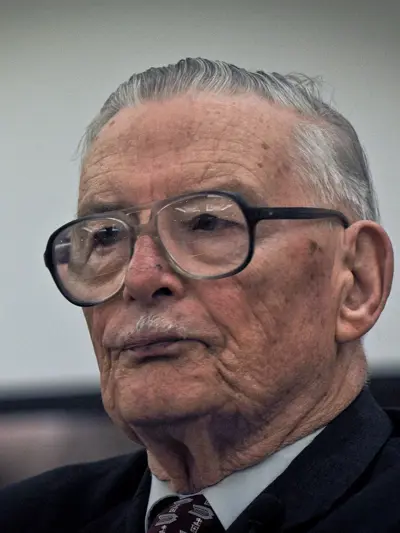
James McGill Buchanan Jr. was an American economist known for his work on public choice theory (included in his most famous work, co-authored with Gordon Tullock, The Calculus of Consent, 1962), for which he received the Nobel Memorial Prize in Economic Sciences in 1986. Buchanan's work initiated research on how politicians' and bureaucrats' self-interest, utility maximization, and other non-wealth-maximizing considerations affect their decision-making. He was a member of the Board of Advisors of The Independent Institute as well as of the Institute of Economic Affairs, a member (and for a time president) of the Mont Pelerin Society, a Distinguished Senior Fellow of the Cato Institute, and professor at George Mason University.
