Friedrich Nietzsche Quotes
Buddha says: "Do not flatter your benefactor!". Let one repeat this saying in a Christian church : it immediately purifies the air of everything Christian.
Nietzsche, Friedrich. The Will to Power. Translated by Walter Kaufmann and R. J. Hollingdale, Vintage Books, 1968, p. 98.


In the midst of the Argentine Dirty War where the right wing government was murdering and torturing their political enemies of the left, most of the Catholic Church Priests and other Church Authorities had sided with the government and morally overlooked their atrocities and crimes against humanity. Others were fearful as Bishop Enrique Angelelli had been murdered by the military death squads in 1976. Bishop Hesayne was one of the few members of the Church hierarchy who criticized church officials for their silence.


“Mormon” is a nickname for members of “The Church of Jesus Christ of Latter-day Saints.” Romney was a Mormon who was running for the Republican Presidential nomination. There remains a good deal of anti-Mormon religious bigotry in the nation.

This quotation is often given to illustrate that what politicians say and what they do can be diametrically opposite. Here, when Hitler’s government came to power, he issued this proclamation that would be regarded as the foundation of morality by modern Evangelical Christians. And yet he implemented one of the most anti-Christian and anti-family regimes in world history—the furthest thing from Christian morality that could be conceived.

She was calling for universal legalization of abortion and addressing Catholic and Muslim representatives who were concerned about the morality of abortion.


The major religions differ when it comes to conversion. Buddhism, Judaism, Hinduism, and some Christian Religions do not aggressively seek converts but will accept converts who come themselves. Other Christian religions and Islam aggressively try and convert others and see it as their religious duty to do so.


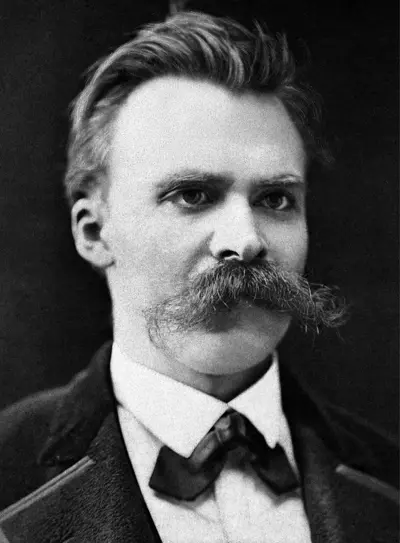
Friedrich Wilhelm Nietzsche was a German philosopher, cultural critic, composer, poet, writer, and philologist whose work has exerted a profound influence on modern intellectual history. He began his career as a classical philologist before turning to philosophy. He became the youngest person ever to hold the Chair of Classical Philology at the University of Basel in 1869 at the age of 24. Nietzsche resigned in 1879 due to health problems that plagued him most of his life; he completed much of his core writing in the following decade. In 1889, at age 44, he suffered a collapse and afterward a complete loss of his mental faculties. He lived his remaining years in the care of his mother until her death in 1897 and then with his sister Elisabeth Förster-Nietzsche. Nietzsche died in 1900.
