Ambrose Bierce Quotes
Brain, v. [as in "to brain"]: To rebuke bluntly, but not pointedly; to dispel a source of error in an opponent.
Bierce, Ambrose. The Devil's Dictionary. The Neale Publishing Company, 1911.

Kennedy had compiled all the overt Federal, State and Local laws and ordinances that required or supported discrimination against Blacks. At the time it was published, the Cold War was raging and the Communists were claiming all over Europe that the United States was really not free given the racial discrimination. With Kennedy’s book, they had a field day citing chapter and verse and naming communities and reading the laws all over the United States. The U. S. Information Agency and the CIA were both were having a difficult time coping with the Communists use of Kennedy’s book, and a CIA agent approached Kennedy and offered to make him “financially independent” if he would repudiate the book and stop publication.


This quotation illustrates a scientific principle that is at the heart of several political issues. Specifically the debate over whether creationism should be taught in science classes along with evolution. The major reason that almost all serious scientists (religious and secular both) oppose teaching creationism is that it is not a “falsifiable” set of statements—that is there is no way to prove it or disprove it. There are scientific statements that can be proved or disproved but have not yet been so. To be a scientific statement, it must be falsifiable—logically provable or disprovable. And this is the logic which the Federal Courts have used in ruling that creationism may not be taught in science classes in public schools. This quotation, Pauli is saying that the paper is not falsifiable—it cannot be proved and cannot be refuted. As such it is not scientific and belongs in the realm of philosophy, literature, theology, or other disciplines, but not science. An example of non-falsifiable statements are: “Blue is the most attractive color.”; “Freedom is essential to capitalism”; “Monarchy is more efficient than theocracy”.

The Senator almost certainly meant to say “disagree” but “agree” is what came out in a gaff that had his Western Pennsylvania audience very confused.

Most modern politicians are just the opposite. The political scene is rife with politicians impugning motives.


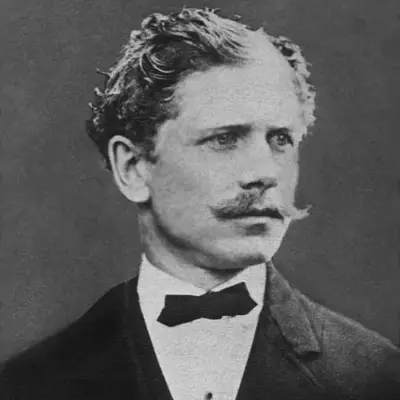
Ambrose Gwinnett Bierce was an American short story writer, journalist, poet, and Civil War veteran. His book The Devil's Dictionary was named as one of "The 100 Greatest Masterpieces of American Literature" by the American Revolution Bicentennial Administration. His story "An Occurrence at Owl Creek Bridge" has been described as "one of the most famous and frequently anthologized stories in American literature"; and his book Tales of Soldiers and Civilians (also published as In the Midst of Life) was named by the Grolier Club as one of the 100 most influential American books printed before 1900.
