Alija Izetbegovic Quotes
Bosnia is a complicated country: three religions, three nations and those 'others'. Nationalism is strong in all three nations; in two of them there are a lot of racism, chauvinism, separatism; and now we are supposed to make a state out of that.
Izetbegović, Alija. Inescapable Questions: Autobiographical Notes. The Islamic Foundation, 2003.


The Ottoman Empire was a word Superpower for over 1,000 years, longer than any other in history, One of its great strengths was its pluralism and ability to not only absorb and assimilate people from other nations, cultures and religions, but also to utilize those people in key positions and contributions to their society. Christians and Jews rose to the highest positions under the Sultans. They became Governor’s of Provinces, manages of departments and even Grand Vizier to the Sultan himself. Jewish and Christian physicians, attorneys, traders were all valued in the Empire even though the had a second class status relative to Muslims. The opportunity was always there to convert to Islam and many did, but many did not and thrived, The Ottomans saw Christian Europe, not only in continuous religious conflict, but individual nations were never able to use the talents of the religious minority, the way that the Ottomans did, and later the United States did. Not only did the Ottomans allow immigrants from all over the world to become part of the Empire Government or Economy, but they actually send agents throughout the empire to find the best and the brightest of young men—regardless of religion or nationality—and bring them to the Sultan’s court for education, training and service. IT should be noted however, that the motivation was in no way moral or a desire for fairness. It was totally pragmatic. Exceptional manpower was not to be wasted.

For most Muslims, their religious identity supersedes their nationalistic identity. Sukarno’s quotation is famous because many ultraorthodox Muslims castigated him for putting nationalism before Islam. There is an orthodox Islamic concept of the Ulma—the community of all Muslims in the world, and this takes precedence over any nation or set of nations. In that sense, extreme Islamic fundamentalists have always opposed Sukarno claiming he was an enemy of Islam.


This was a common view of Southern leaders. Society had to be monolithic culturally. In the North, the constant immigration from the world over made pluralism much more normative. However, the vast majority of the North opposed slavery and believed that slavery and free labor could not coexist. So the Southern argument on that point was turned on them, and the monolithic views of the South has constantly eroded and become more tolerant and pluralistic and by the 21st century, there were parts of the South that were more tolerant and pluralistic than some parts of the North. Change, reform and liberalism was slow to take hold but it was inexorable.

Although he pleaded for unity, Fiji has been ethnically divided ever since and in 2009 reached a de facto coups over ethnicity.

Most social and demographic changes many people fear will continue on a trend and assume the extrapolation will become reality. Few ever do, and the fears turn out to be just fears.
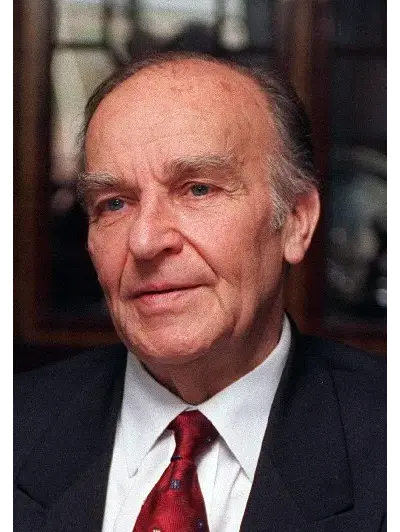
Alija Izetbegović was a Bosnian politician, lawyer, Islamic philosopher and author, who in 1992 became the first president of the Presidency of the newly independent Republic of Bosnia and Herzegovina. He served in this role until 1996, when he became a member of the Presidency of Bosnia and Herzegovina, serving until 2000.
