Robert Marshall Quotes
Boon doggles.
At a 1935 New York City hearing into the operations of the city Relief Administration during the great depression. He was asked what he taught the relief recipients to do in his training program. He then explained that this was the old pioneer designation for weaving ropes and similar handicrafts. The phrase has been used ever since in politics. See Franklin Delano Roosevelt.
Robert Marshall, ?, New York City Training Specialist, New York Aldermanic hearing, 1935
Sourced by: Eigen's Political and Historical Quotations

In the beginning of the 21st century governments with large financial resources developed many buildings and communities as did in some capitalistic countries private firms. Many were successful but there were some failures almost everywhere. However after the Meltdown of 2008 and the Great Recession many large buildings and communities the world over were under-utilized and in many cases not used at all. Proportionately, Ireland, Spain and Greece had the worst problem (public as well as provate). However just because of size and wealth, the United States and China had the most unused buildings and communities that were developed. However, many economists and developers argue that even of those projects were failures, the buildings, streets, sewers, utilities and infrastructure will be there and when the economy heats up, they will be used.


Viscount Morley of Blackburn

He and the other commissioners of both political parties were agreed that the procurement by The State Department, USAID, and especially the Defense Department which spent the most was terrible. The even had military generals in charge of billions of dollars of procurement who did not even know the procurement laws and regulations they were supposed to obey much less the skill of good procurement.

His definition of foreign aid given in this quotation is a classic example of political rhetoric. It is exaggerated somewhat, but basically true. The poor in America do not really pay much in taxes that would pay for foreign aid. However the middle class does. In the foreign counties much of the foreign aid money gets siphoned off by graft and corruption which is inevitably dominated by some of the rich of the country. Even if the money is spent without any graft or bribery, materials have to be procured and labor has to be supplied and foreign rich people own the companies which make the profits selling goods, labor and services to the foreign aid projects. In some nations the rich had set up a two-tier pricing for their products and services. One for normal business and commerce; a higher one for foreign aid projects.
This and other quotations like {640615} and {640616} show that the State Department knew that Mobutu Sese Seko, the man we were backing in the Congo had many very undesirable characteristics for a dependable foreign ally and one who should be given control of billions of American money. Yet nothing was done and we continued to support him despite the kleptocracy and the instability that undermined his regime and the United States along with it.
The "spigot" refers to the fact that immediately after the 9-11 attack, huge sums of money were available and the Department of Homeland Security was created by moving many different agencies from other departments into the new department. There were poor or no fiscal controls, and at the same time the public officials of the new department were under such extreme pressure lest there might be another attack that they went forward with almost every scheme that anyone claimed would make the nation safer. Most were useless and some just frauds, and much money was wasted. What is particularly interesting about this quotation is that a high government official admitted that things were handled badly and money had been wasted.


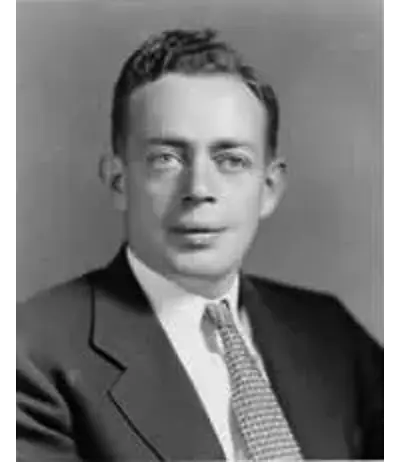
Robert Marshall was an American forester, writer and wilderness activist who is best remembered as the person who spearheaded the 1935 founding of the Wilderness Society in the United States. Marshall developed a love for the outdoors as a young child. He was an avid hiker and climber who visited the Adirondack Mountains frequently during his youth, ultimately becoming one of the first Adirondack Forty-Sixers. He also traveled to the Brooks Range of the far northern Alaskan wilderness. He wrote numerous articles and books about his travels, including the bestselling 1933 book Arctic Village.
