Swami Vivekananda Quotes
Books cannot teach God, but they can destroy ignorance; their action is negative.
Vivekananda, Swami. The Complete Works of Swami Vivekananda. Vol. 7, Advaita Ashrama, 1947, p. 22.


This was written when Islam was intellectually far more advanced than Christian Europe. This viewpoint was one of the reasons for their advanced civilization. It was held by many. It is still held by many Muslims, but for the fundamentalist of Islam today, ignorance of anything that is not in the Koran or other sayings of the Prophet is a virtue. Madrassas throughout the Islamic world teach only the Koran and religious law and nothing of mathematics, philosophy, science, history and never of other religions.

There was the beginning of a major debate in the advanced countries over the notion of copyright to protect authors and knowledge being a public property. The solution for America and most nations was to allow copyright protection for the specific expression of the knowledge but not the knowledge itself. You cannot copyright an idea or the laws of science—just the way they are expressed. Therefore all are free to discuss the knowledge and also write about it.

Learning, studying and seeking knowledge are fundamental to Mormonism. In this sense, it is very similar to Judaism.


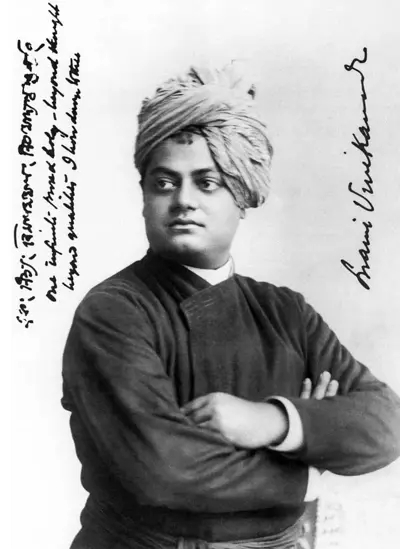
Swami Vivekananda, born Narendranath Datta (Bengali: [nɔrendronatʰ dɔto]), was an Indian Hindu monk. He was a chief disciple of the 19th-century Indian mystic Ramakrishna. He was a key figure in the introduction of the Indian philosophies of Vedanta and Yoga to the Western world, and is credited with raising interfaith awareness, bringing Hinduism to the status of a major world religion during the late 19th century. He was a major force in the contemporary Hindu reform movements in India, and contributed to the concept of nationalism in colonial India. Vivekananda founded the Ramakrishna Math and the Ramakrishna Mission. He is perhaps best known for his speech which began with the words "Sisters and brothers of America ...," in which he introduced Hinduism at the Parliament of the World's Religions in Chicago in 1893.
