Kenneth Rexroth Quotes
Bohemia is a commune in which the Revolution is over and everyone is a member of the aristocracy
Rexroth, Kenneth. The Alternative Society: Essays from the Other World, Herder and Herder, 1970, p. 14.

At the time, Capetown was under the control of the Dutch East India Company which had recruited Gordon from Scotland. There was a wave of liberality following the Enlightenment, the American Revolution, and the very vocal English, anti-slavery, reformers. The Dutch were concerned mainly with making money, and that they thought that meant stability and the status quo. Gordon was their strong spokesman on this. Like American Southern slave owners, Gordon read the Bible as God endorsing slavery and the inferiority of Blacks. Thus, reformers did not "believe in God any more".


The slogan was made famous by James Larkin, 1875–1947, Irish trade union leader who used it frequently and whose memorial statue in Dublin contains the quotation in French, English and Irish.

It is hard for us today to understand why intelligent, thoughtful, people would seriously consider and even advocate anarchy. Yet there were many intelligent people who preached anarchy. The key to understanding this is that it is also hard for us to realize how terrible and actually dangerous was typical life under the Russian Government of the Czars. It was not only that most people were serfs--virtually slaves, but the government officials, the military and civilian both, could and did, abuse people in every way imaginable. In America today, if any of us were unfortunate to be the victim of violence, the odds are high that it would be at the hands of another citizen. In Russia (and other countries) at the time, the odds were that the perpetrator of the violence was a government official or government sanctioned person—police, military, aristocrats, civil officers. As but one example. Cossacks would frequently get drunk, pillage and rape a community and kill any who resisted—all with impunity. This quotation from Tolstoy is the classic argument of the anarchist at the time. It was impossible that the absence of government could be as bad as the government then was.


The Flies was a play and this quotation is dialogue uttered by King Aegistheus in Act 2. The existence of a free man or woman has always been an anathema to a King or a Dictator.


In 1905, she and her husband—young, intellectual middle class, revolutionists from Moscow—escaped from the Czar’s secret police and emigrated to America where until 1917, she feared assassination by Czarist agents in America. After the Civil Rights Act and the Voting Rights Act were passed, she felt that all her utopian, communist dreams had been fulfilled--in America. But Russia, in many ways, were as bad then as in the days of the Czars. See {634475} and {634476} for her views on communism. Many of the American “leftist communists” were great admirers and lovers of America except for the legal and governmental support of segregation. When that went, America was their ideal.

Despite his speeches like this one, he was a ruthless dictator who then before his death in 2000 handed power to his son.
The revolutionists were disorganized and unfocused after the Coup that brought them to power. This speech provided some focus for a while. Early in his career, as a Journalist working in Leiden, Holland, he was very active and helpful to the Dutch Patriots and Revolutionaries in their takeover of the government. He helped draft the New Dutch Constitution and participated in most of the new governments conventions.


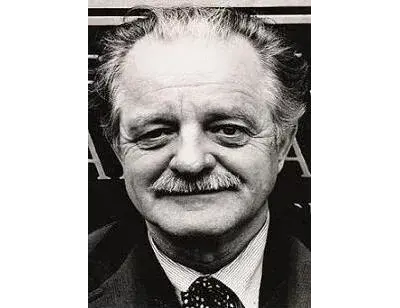
Kenneth Charles Marion Rexroth was an American poet, translator, and critical essayist. He is regarded as a central figure in the San Francisco Renaissance, and paved the groundwork for the movement. Although he did not consider himself to be a Beat poet, and disliked the association, he was dubbed the "Father of the Beats" by Time magazine. Largely self-educated, Rexroth learned several languages and translated poems from Chinese, French, Spanish, and Japanese.
