Aesop Quotes
Better to die once and for all, than live in continual terror.
Townsend, George Fyler, trans. Three Hundred and Fifty Aesop's Fables. George Routledge and Sons, 1867, p. 71.


He was later assassinated.

The fear of nuclear war was a major emotion for most people in the world at the time. Hard liners like Goldwater were concerned that that fear would undermine support for greater nuclear development and deployment in America and maintaining opposition to nuclear test ban treaties that were under discussion. He made the mistake however of referring to the fear as “craven”, morally denigrating any American who might be in fear of nuclear war, which included just about everyone. So the Democrats took this quotation and used it in their battery of TV ads showing Goldwater as not only a hard liner, but one who had no empathy or understanding for a normal person who feared a nuclear conflict—one who was not to be trusted with the Presidency. Had Goldwater simply argued that legitimate and reasonable fear of nuclear conflict might make the nation too timid and perhaps inadvertently increase the likelihood of nuclear disaster by not standing up to the Russians, he may not have had the resentment from most people who thought Goldwater was calling their fears “craven”.


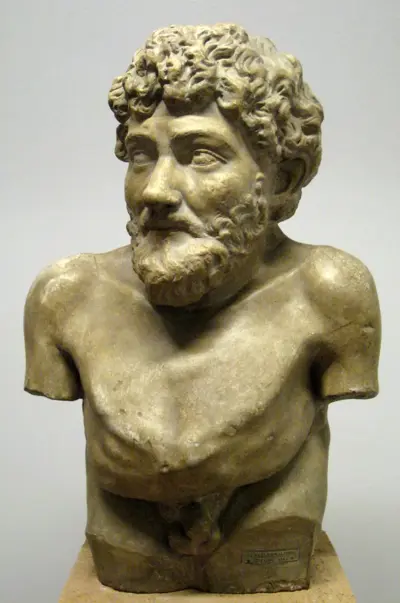
Aesop (c. 620–564 BCE) was a Greek fabulist and storyteller credited with a number of fables now collectively known as Aesop's Fables. Although his existence remains unclear and no writings by him survive, numerous tales credited to him were gathered across the centuries and in many languages in a storytelling tradition that continues to this day. Many of the tales are characterized by animals and inanimate objects that speak, solve problems, and generally have human characteristics.
