Warren G. Harding Quotes
Believing as I do in political parties, I had rather that the party ... should, in its conferences, make a declaration than to assume a leadership or take an individual position on the question.
Warren G. Harding, 1865-1923, 29th President of the United States (Republican, OH), Quoted in Martin, Ballots & Bandwagons, Rand McNally, 1964
Sourced by: Eigen's Political and Historical Quotations


In 1989 Russia held contested elections for the first time since the 1917 revolution. Numerous incumbent party leaders lost.


This was a new political phenomenon where a President was perceived as more important, more powerful, and preferable to his party. Note that the base of the scale is labeled “Public Opinion”.


At that time the Presidential nominee had influence but could not unilaterally determine who his running mate would be as the Party Conventions—especially the Democratic Party Convention—was wide open. The candidate joked in this quotation, but the party leaders were very unhappy with such an open convention and after the 1972 election which they lost handily, the rules were changed to give party leaders more influence. By the 21st century, the primary elections had all but made the party conventions a quaint celebration and no serious decisions were made by the party leaders or the party delegates.


Republican Party primary elections had become very contentious. The radical right and the Tea Party, though a minority of the party, had the power to destroy almost any Republican candidate’s chances. So those Republican political candidates were forced to pander to the extreme right and then try and backtrack to the center for the general election. As a result, few people believed the statements of Republican office seekers as no one knew what they really believed including members of their own party, Bush, no longer running for any political position, found himself with much more credibility and influence in the party than those who were running for office. The problem of appealing to party extremes was not unique to the Republicans at that time, but the degree and extent was unprecedented accounting for the distrust.

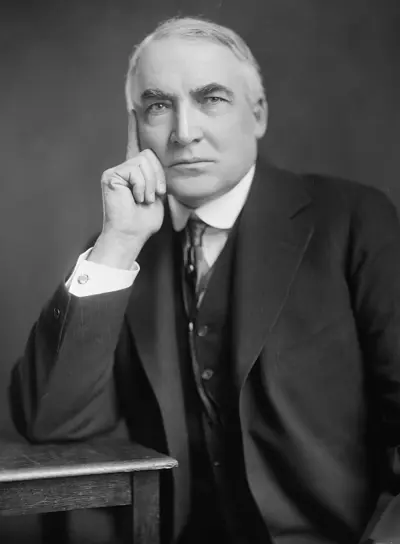
Warren Gamaliel Harding was the 29th president of the United States, serving from 1921 until his death in 1923. A member of the Republican Party, he was one of the most popular U.S. presidents to that point. After his death, a number of scandals, including Teapot Dome, came to light, as did his extramarital affair with Nan Britton; those eroded his popular regard.
