Buddha Quotes
Believe nothing, O monks, merely because you have been told it ... or because it is traditional, …. Do not believe what your teacher tells you merely out of respect for the teacher. But whatsoever, after due examination and analysis, you find to be conductive to the good, the benefit, the welfare of all beings—that doctrine believe and cling to
Buddha, 563 BC-483 BC, [Gautama Siddartha], Religious Founder, Instructions to young monks
Sourced by: Eigen's Political and Historical Quotations

This a particularly important quotation from a religious source. This view was espoused by Spinoza and for it he was excommunicated by the Jews, Christians and the Muslims. Although he was a devout Jew, he was accused of being irreligious because this view undermined the authority of the Rabbis, Priests, and Imams. See {624859}.


This principle, so important to the philosophy of science, was a major component of the philosophy of Spinoza—the part that had him excommunicated by the 3 major religions of the era.


He works were banned and he was banished by both the North Vietnamese and the South Vietnamese during the Vietnam War where he tried to be a mediator and was present at the Paris Peace Talks. As late as 2007 he was still not allowed into Vietnam.


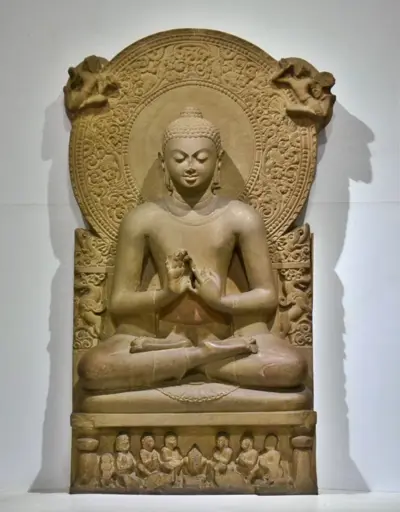
The Buddha (also known as Siddhattha Gotama or Siddhārtha Gautama or Buddha Shakyamuni) was a philosopher, mendicant, meditator, spiritual teacher, and religious leader who lived in what is now Nepal and India (c. 5th to 4th century BCE). He is revered as the founder of the world religion of Buddhism, and recognized by most Buddhist schools as the Enlightened One who is believed to have transcended Karma and escaped the cycle of birth and rebirth. He taught for around 45 years and built a large following, both monastic and lay. His teaching is based on his insight into duḥkha (typically translated as "suffering") and the end of dukkha—the state called Nibbāna or Nirvana.
