Chester Bowles Quotes
Because there can be no real individual freedom in the presence of economic insecurity, liberalism carries a heavy responsibility in fighting continuously to expand our economy.
Chester Bowles, 1901-1986, U. S. Under Secretary of State (Democrat), Quoted in The New Republic, July 22, 1946
Sourced by: Eigen's Political and Historical Quotations

He was concerned that if steps were taken to protect the environment and they slowed or shrank economic growth, the burden would fall disproportionately on the poor.


The only publication with a full time Poverty beat
At the time of this quotation, the nation had gone through more than 3 decades of enormous increase in prosperity for the wealthy, and modest gains for the highly skilled, technically trained workers. However, correcting for inflation, average salaries did not increase at all. The middle class was particularly hard hit. Only 20 percent of the population benefitted from the growth at all; however, the 1 percent had rarely prospered more. Kenworthy’s principle did not apply for this period of American history.


He was referring to the success of the Clinton Administration.


This was an honest theoretical belief of Mises. However, most of the criticism of capitalism in the industrial democracies is precisely the lack of unemployment and sustenance for all. When it does, even complaints about inequality tend to be minimal. But some capitalist societies never provided these, and by the 21st century, no capitalist nation was able to do so permanently without recessions and depressions.


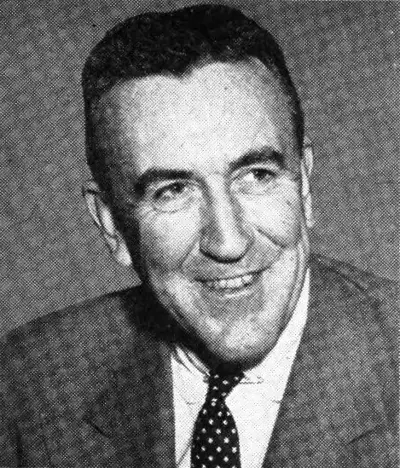
Chester Bliss Bowles was an American diplomat and ambassador, Governor of Connecticut, Congressman and co-founder of a major advertising agency, Benton & Bowles, now part of Publicis Groupe. Bowles is best known for his influence on American foreign policy during Cold War years, when he argued that economic assistance to the Third World was the best means to fight communism, and even more important, to create a more peaceable world order. During World War II, he held high office in Washington as director of the Office of Price Administration, and control of setting consumer prices. Just after the war, he was the chief of the Office of Economic Stabilization, but had great difficulty controlling inflation. Moving into state politics, he served a term as governor of Connecticut (1949 to 1951). He promoted liberal programs in education and housing, but was defeated for reelection by conservative backlash.
