Lawrence Wright Quotes
At the time of the Cole Bombing there were only 8 Arabic-speaking agents in the entire FBI.
Lawrence Wright, Journalist, Interview. C-SPAN After Words, September 10, 2006
Sourced by: Eigen's Political and Historical Quotations


36 days later, September 11, he did strike, and at the World Trade Center. The memo was kept secret by the Bush administration until public pressure as a result of the 9-11 Commission hearings forced the declassification and release. At that point it became clear that there was no reason that the memo could not have been released much earlier except that it was embarrassing.

This was one of the many major weaknesses of our Intelligence Agencies.


Inspire Magazine was the official propaganda magazine of Al Qaeda.


There can be a heavy cost in terms of giving up rights, costs of prevention the internal conflict in the society about how to deal with the terrorists.


The “Principals Committee” is the senior interagency forum for consideration of policy issues affecting national security. It includes the National Security Director (Chair), the CIA Director, the Secretary of Defense and his Deputy, the Secretary of State and his Deputy, the Chairman of the Jount Chief’s of Staff, The Special Representative to the United Nations and other staff as invited. Clarke was almost always invited to these meeting when terrorism was discussed but he did not have a vote. This is a very important quotation for several reasons. First, it shows the influence that the Defense Department and CIA leaders had with President Bush before the 9-11 attack. It also illustrates dramatically how reluctant our military and CIA were to use drones. It was President Obama who overruled them and changed America policy to use Drones to protect American interests. It also indicates how there was a split regarding the perception of the danger of Al Qaeda and bin Laden with Clark and some of the other Principals placing more value on a military strike than the military and covert action leaders. This is not uncommon despite the fact that public perception is that it is always the military leaders who are the hawks. Also, it illustrates the problem of allowing the military point of view to always prevail in national policy making involving use of force. See {639322}.
36 days later, September 11, he did strike. See {617467} for some of the specific contents. The memo was kept secret by the Bush administration until public pressure as a result of the 9-11 Commission hearings forced the declassification and release. At that point it became clear that there was no reason that the memo could not have been released much earlier except that it was embarrassing. See {637530} and {637533} for two other Bin Laden Warnings that Bush and his team ignored.
36 days later, September 11, he did strike, and at the World Trade Center. The memo was kept secret by the Bush administration until public pressure as a result of the 9-11 Commission hearings forced the declassification and release. At that point it became clear that there was no reason that the memo could not have been released much earlier except that it was embarrassing.


Hayden was then ordered to go ahead with several of the ideas for which “no authority existed” including massive secret wiretapping of phone calls that were against the law as it existed. Cheney and the President decided not to ask Congress for a legal change, but took the position that if the President says to do it, it cannot be illegal as he is the Commander in Chief. The lower Federal Courts and the Supreme Court ruled that the doctrine was preposterous and un constitutional.

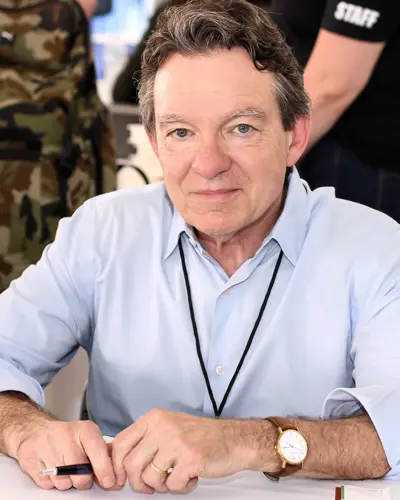
Lawrence Wright is an American writer and journalist, who is a staff writer for The New Yorker magazine, and fellow at the Center for Law and Security at the New York University School of Law. Wright is best known as the author of the 2006 nonfiction book The Looming Tower: Al-Qaeda and the Road to 9/11. Wright is also known for his work with documentarian Alex Gibney who directed film versions of Wright's one man show My Trip to Al-Qaeda and his book Going Clear. His 2020 novel, The End of October, a thriller about a pandemic, was released in April 2020 during the COVID-19 pandemic, to generally positive reviews.
