John Paul Stevens Quotes
At bottom, the Court's opinion is thus a rejection of the common sense of the American people, who have recognized a need to prevent corporations from undermining self-government since the founding, and who have fought against the distinctive corrupting potential of corporate electioneering since the days of Theodore Roosevelt. It is a strange time to repudiate that common sense. While American democracy is imperfect, few outside the majority of this court would have thought its flaws included a dearth of corporate money in politics.
Stevens, John Paul. Citizens United v. Federal Election Commission, 558 U.S. 310, Supreme Court of the United States, 21 Jan. 2010, p. 479.


Not only both parties agreed on the evil of corporate money in politics, but there was not even a single dissent on this point. Also, the President was in agreement {634816}. A century later, there were only a handful of senators who did not think that corporate money was critical in politics. This was a flip flop for BOTH major parties.


Statement made by Obama at the 2010 State of the Union address. As Democratic lawmakers arose behind the justices and clapped, TV cameras caught Justice Alito shaking his head and mouthing the words “not true.” He was right, as even the New York Times’s Linda Greenhouse acknowledged. Justice Alito was surprised by Mr. Obama’s error. “I imagine the State of the Union speech is vetted inside out and backwards. Somebody should have seen that this statement was inaccurate. My mistake was that I didn’t think about the fact that the text is distributed to the media ahead of time. They knew that the president was going to talk about the Supreme Court, so they had their cameras on us. . . . That’s why it’s a sore point.”
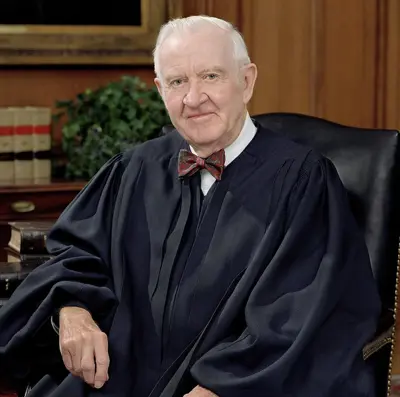
John Paul Stevens was an American lawyer and jurist who served as an associate justice of the United States Supreme Court from 1975 until his voluntary retirement in 2010. At the time of his retirement, he was the second-oldest-serving justice in the history of the court and the third-longest-serving justice. At the time of his death, he was the longest lived Supreme Court justice ever. His long tenure saw him write for the court on most issues of American law, including civil liberties, death penalty, government action and intellectual property. In cases involving presidents of the United States, he wrote for the court that they were to be held accountable under American law. A registered Republican when appointed who throughout his life identified as a conservative, Stevens was considered to have been on the liberal side of the court at the time of his retirement.
