Robert Kennedy Quotes
Assassins have never changed history.
See Banjamin Disraeli for an earlier expression of this idea.
Robert F. Kennedy, 1925-1968, U.S. Senator (Democrat, NY), U.S. Attorney General, Remark on the death of President John F. Kennedy, 1963
Sourced by: Eigen's Political and Historical Quotations

See Robert F. Kennedy for a later expression of this sentiment. 1st Earl of Beaconsfield


The motivations and willingness to die of the suicide bomber is not unique to Islamic terrorists. On occasion our CIA has used the technique. Official CIA instructions on “lost assassination” were distributed within the agency and sometimes to our “allies” who we were training.


Yitzhak Rabin was the extremely popular President of Israel. At the time of his assassination his party controlled the Knesset (Parliament) and he was moving to make a two state solution to the Palestinian-Israeli problem. An ultra Orthodox Jewish fanatic shot Rabin so what there would be no settlement that would give up Israeli control of Judea and Samaria—the Biblical lands that literal believers in the Bible know that God consecrated that land for the Jewish People. To make a settlement compromise was needed on both sides and Rabin was strong enough to persuade most of the Israelis to take that risk. His successors never had the trust and confidence of the Israeli people that Rabin had as he had led the Israeli armed forces to victory and had also proved that he was a brilliant politician on domestic affairs. The unity that Rabin was able to create among Israelis has never been duplicated by any Israeli politician since.


Muslim League leaders wanted to stir up India's Muslims in order to prevent Indian Independence from Britain unless India were partitioned and the Muslims could have their own nation. At that point the British and the Congress Party of India—the majority political party were both starting to plan for independence. Most of the Muslim nationalists did not want to have any Muslims living in a Majority Hindu nation. To stop it, they first used fear claiming that when the British left, the Hindus would massacre all the Muslims. They galvanized the Muslims to first attack the Hindus to dissuade then from their attacks which at that point were imaginary except in the conspiracy theory of the Muslim League. The moral logic of this statement was similar, albeit not to the same bloody degree, as the famous quotation of Presidential Candidate Barry Goldwater on extremism." H. S. Suhrawardy

This is one of the early descriptions of Islamic Terrorists and Assassins. Tutuses employed them to kill his brother, the Sultan. This passage also illustrates part of the history of Islamic sultans being deposed and/or killed by their own relatives which explains the hostility of Sultans to their own family during the Ottoman Empire. Note also the glorification of their own death which has been characteristic of many Islamic subgroups throughout history. So the modern suicide bomber is in a sense not a new phenomenon; the weapon is what has changed.
The veiled threat of violence and disruption was a tactic that did not work.


Pinkerton worked out a plan to spirit Lincoln through Baltimore where he had to change trains.
Thai society had been polarized and very large peaceful demonstrations (by the Yellow Shirts) were calling for the resignation of the government which although very corrupt and controlled by a single very rich family which had extensive support of the rural and poor (the Red Shirts). This quotation illustrates how a peaceful protest could lead to violence and terrorism. This Red Shirt leader, rather than lose, would lead violence in the streets like the Brown Shirts of the pre WWII Germany. If the violence fails, he was willing to go underground and become a terrorist movement.

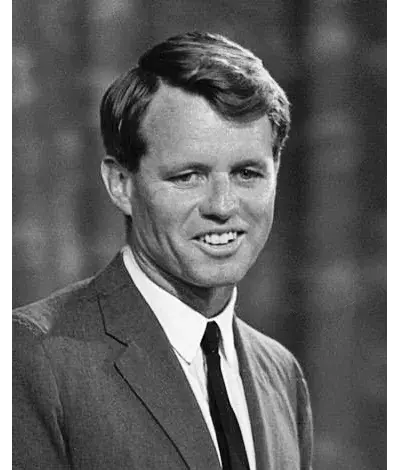
Robert Francis Kennedy, also referred to by his initials RFK or by the nickname Bobby, was an American politician and lawyer who served as the 64th United States Attorney General from January 1961 to September 1964, and as a U.S. Senator from New York from January 1965 until his assassination in June 1968. He was, like his brothers John and Edward, a prominent member of the Democratic Party and has come to be viewed by some historians as an icon of modern American liberalism.
