Hugo Black Quotes
As nearly as practicable one man's vote in a congressional election is to be worth as much as another's.
Hugo Black, 1886-1971, U. S. Senator (Democrat, AL), U. S. Supreme Court Justice, Westbury v. Sanders
Sourced by: Eigen's Political and Historical Quotations


This was the result of Gerrymandering over the last decade where the Republicans outmaneuvered the Democrats in enough states so that they could control the House even of the Democrats had a large majority of the votes for congress members. See {632784} for an explanation of Gerrymandering technique.


Even after the South was defeated in the Civil War, most Southern politicians strove to keep the newly freed Blacks from voting. The vehicle they chose to attain that purpose was the concept of States’ Rights where the states were the sole determiners of who could and could not vote. The majority of the country rejected that view and the Constitution was amended to allow Black men to vote. After reconstruction Black voting in the South was curtailed substantiality by devices such as poll taxes and literacy requirements and terror and intimidation. It was not until the latter part of the 20th century that most Blacks could vote in the Southern States.

In the beginning of the 21st century, many republican state legislatures attempted to change the voting laws to eliminate the possibility of voter fraud which was not a serious practical problem in America. However, a consequence—some argue indented and some argue unintended—was that it was harder for certain groups of people to meet the new requirements and therefore was a de facto voter suppression for some people such as the very elderly, the homeless, and the poor. Many of these efforts were declared unconstitutional by the courts.


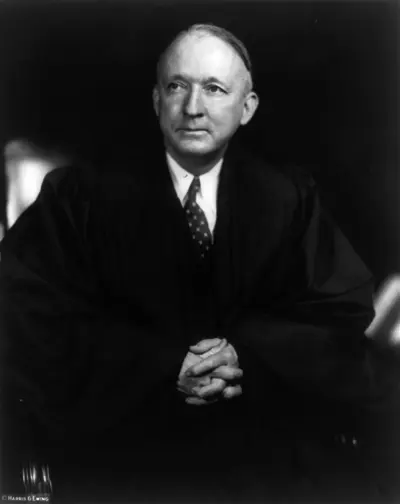
Hugo Lafayette Black was an American lawyer, politician, and jurist who served as a U.S. Senator from 1927 to 1937 and as an Associate Justice of the Supreme Court of the United States from 1937 to 1971. A member of the Democratic Party and a devoted New Dealer, Black endorsed Franklin D. Roosevelt in both the 1932 and 1936 presidential elections. Having gained a reputation in the Senate as a reformer, Black was nominated to the Supreme Court by President Roosevelt and confirmed by the Senate by a vote of 63 to 16 (six Democratic Senators and 10 Republican Senators voted against him). He was the first of nine Roosevelt appointees to the Court, and he outlasted all except for William O. Douglas.
