Charles V. Chapin Quotes
As it takes two to make a quarrel, so it takes two to make a disease, the microbe and its host.
Chapin, Charles V. The Papers of Charles V. Chapin, M.D.: A Review of Public Health Realities. Edited by Clarence L. Scamman, The Commonwealth Fund, 1934.


This is an amazing quotation and shows that the Ancient Romans who had a very sophisticated medical technology had a notion of germs and microbes. Ancient Rome was the first organized nation for which health, medicine, public health, and medical research were governmental functions unlike Greece and other civilizations where health was a personal function. Roman policy emphasized prevention unlike the Greeks. Sanitation and water supply and quality were government responsibilities and the Roman standard was not reached in the rest of the world until the 18th century. Heath and medicine was also a major military responsibility. The Roman Empire depended on its army, and trained professional soldiers. Disease was a greater risk to the soldiers than were battlefield casualties, and the Romans had a strong vested interest in keeping these highly trained men alive and healthy—not just the wealthy Roman citizens. The Romans were open to techniques that were developed throughout the Empire and beyond and tended to adopt all good ideas and a few bad ones as well While they had advanced surgery, the public health was the strongest aspect of Roman medicine and health and this notion of germs and disease. Remember that the writer was not a medical or scientific man, but was just indicating what was general wisdom of the Roman elite.

This is a historically significant quotation as it shows that Bassi, prior to Pasteur, discovered the germ theory of disease. Pasteur had a portrait of Bassi in his office.


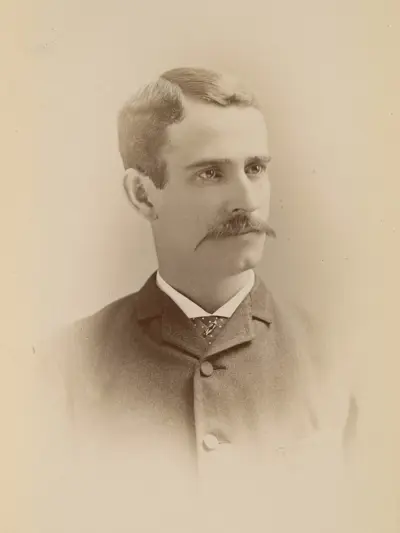
Charles Value Chapin, M.D. was an American pioneer in public health research and practice during the Progressive Era. He was superintendent of health for Providence, Rhode Island between 1884 and 1932. He also served as President of the American Public Health Association in 1927. His main fields of operation were working in the bacteriological laboratory, organizing public health measures, and publicizing urgent public health needs. His popular reputation came from his strong attacks on popular misconceptions, such as that filth caused disease; that diseases were indiscriminately transmitted through the air, often accompanied by bad smells; and that disinfection was a cure-all for many sanitary evils.:114–115
