Marcus Terentius Varro Quotes
There are bred certain minute creatures which cannot be seen by the eyes, which float in the air and enter the body through the mouth and nose and there cause serious diseases.
This is an amazing quotation and shows that the Ancient Romans who had a very sophisticated medical technology had a notion of germs and microbes. Ancient Rome was the first organized nation for which health, medicine, public health, and medical research were governmental functions unlike Greece and other civilizations where health was a personal function. Roman policy emphasized prevention unlike the Greeks. Sanitation and water supply and quality were government responsibilities and the Roman standard was not reached in the rest of the world until the 18th century. Heath and medicine was also a major military responsibility. The Roman Empire depended on its army, and trained professional soldiers. Disease was a greater risk to the soldiers than were battlefield casualties, and the Romans had a strong vested interest in keeping these highly trained men alive and healthy—not just the wealthy Roman citizens. The Romans were open to techniques that were developed throughout the Empire and beyond and tended to adopt all good ideas and a few bad ones as well While they had advanced surgery, the public health was the strongest aspect of Roman medicine and health and this notion of germs and disease. Remember that the writer was not a medical or scientific man, but was just indicating what was general wisdom of the Roman elite.
Marcus Terentius Varro, 116 B.C. – 27 B.C., Roman Literati, De Re Rustica
Sourced by: Eigen's Political and Historical Quotations


This is a historically significant quotation as it shows that Bassi, prior to Pasteur, discovered the germ theory of disease. Pasteur had a portrait of Bassi in his office.

The white Europeans had over centuries built up immunity to some of the worst infectious diseases but when they first landed in the New World brought smallpox and other deadly diseases to which the Indians had no immunity.


He is in charge of collecting and deploying the funds donated for infectious diseases from countries throughout the world. Each nation has its own budget cycle and the public health officials have to plan and act as soon as they learn that an epidemic is breaking out. The viruses and bacteria grow when they grow, not when budgets have planned for them.
Virtually every spread of virus caused disease that has occurred in the late 20th century and onward was spread to different regions by people, who in an age of rapid travel, are what the public health scientists call “the vectors” — the carriers of the disease. In earlier times it was animals like rats who spread the disease.


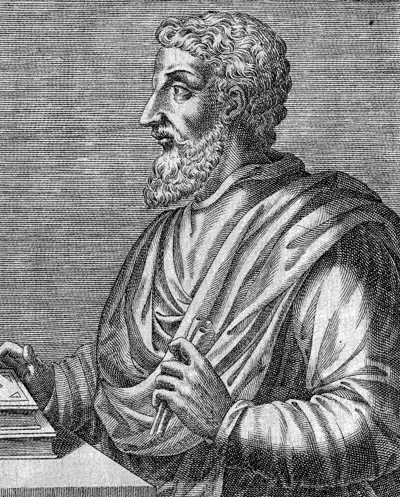
Marcus Terentius Varro (Latin: [ˈmaːrkʊs t̪ɛˈrɛn̪t̪ijʊs ˈwarːoː]; 116–27 BC) was one of ancient Rome's greatest scholars and a prolific author. He is sometimes called Varro Reatinus [ˈwarːoː reaːˈt̪iːnʊs] to distinguish him from his younger contemporary Varro Atacinus.
