Gore Vidal Quotes
As a schoolboy, I read most of Carl Sandburg's six-volume biography of Abraham Lincoln.
Vidal, Gore. United States: Essays 1952-1992. Random House, 1993.


This Civil War recruiting poster was described by the Free Library of Philadelphia as “Civil War recruitment print targeting African Americans by evoking the freedoms granted by the Emancipation Proclamation. Depicts a montage of symbolic scenes centered around an African American Union soldier triumphantly holding up a sword and an American flag with the banner "Freedom to the Slave." He stands near broken shackles upon a tri-color flag adorned with a coiled snake. The flag is tugged upon by one of three joyous slaves freed by an African American soldier. Other scenes depict an African American man reading a newspaper on a rocking chair near a plow and child, African American children entering a "Public School" near a church, and a regiment of "U.S. Colored Troops" marching across a battlefield strewn with dead bodies.”

At the time, the prevailing federal policy was to return fugitive slaves to their owners. Lincoln was intent on keeping Kentucky and Maryland, both slave states, in the union, even at the cost of returning fugitive slaves. Shortly after, he came up with the policy of always returning fugitive slaves except in the rebellious states of the confederacy where the slaves were legally defined as ‘contraband’—war material, and thus could be seized by Union forces. Many fugitive slaves were thus employed by the Union for construction projects. Later, the Emancipation Proclamation set the slaves of the Confederacy free.


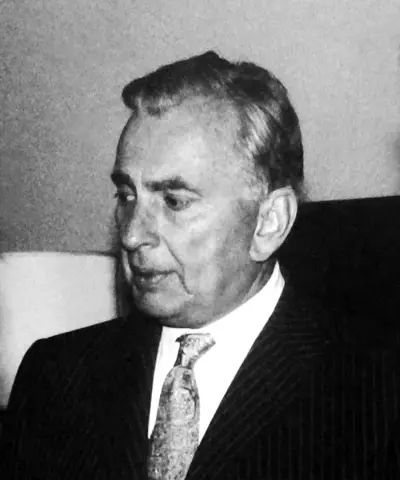
Eugene Luther Gore Vidal was an American writer and public intellectual known for his epigrammatic wit, patrician manner, and polished style of writing. Vidal was openly bisexual and his novels often dealt with LGBT characters, which was unusual at the time. Beyond literature, Vidal was heavily involved in politics. He twice sought office—unsuccessfully—as a Democratic Party candidate, first in 1960 to the United States House of Representatives (for New York), and later in 1982 to the U.S. Senate (for California).
