Philip Stanhope, 4th Earl of Chesterfield Quotes
Armies, though always the supporters and tools of absolute power for the time being, are always the destroyers of it too; by frequently changing the hands in which they think proper to lodge it.
Stanhope, Philip Dormer. Letters to His Son on the Fine Art of Becoming a Man of the World and a Gentleman. Edited by Oliver H. G. Leigh, M. Walter Dunne, 1901.


Fremont and some of the Radical Republicans wanted Lincoln immediately to declare the slaves of the rebelling states free. As a major general in charge of an area, he wrote a military order emancipating all the slaves in his jurisdiction. President Lincoln countermanded the order as soon as he found out. He wanted Fremont to only free the slaves whose owners were actively working against the union. Lincoln needed to hold the border states like Maryland in the Union and was working on a plan whereby slave owners who were loyal to the Union would be economically compensated when their slaves were freed. If loyal slaveholders in Fremont’s area would lose their slaves with no compensation, Lincoln feared that the otherwise loyal border states would be driven to the confederacy thus shifting the balance of power. Lincoln had his own plan for emancipation and would not allow Fremont to alter that. As a result of this speech, the Radical Republicans nominated Fremont to run against Lincoln. For a few weeks he looked like he would run, but then he and Lincoln made a deal. Lincoln fired Montgomery Blair, Fremont’s arch enemy, from the cabinet, and Fremont withdrew from the election.


20th century Africa and South America were particularly good examples.


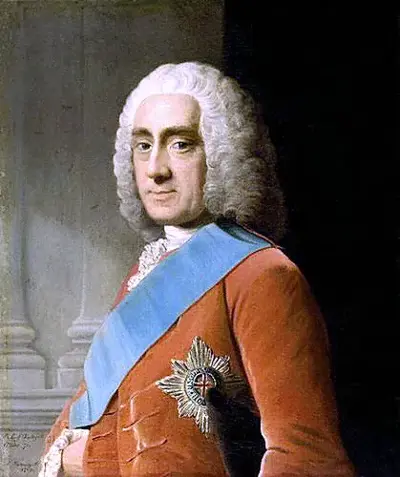
Philip Dormer Stanhope, 4th Earl of Chesterfield, was a British statesman, and a man of letters, and wit. Educated at Trinity Hall, Cambridge, he subsequently embarked on the Grand Tour of the Continent, to complete his education as a nobleman, by exposure to the cultural legacies of Classical antiquity and the Renaissance, and to become acquainted with his aristocratic counterparts and the polite society of Continental Europe.
