Barbara Tuchman Quotes
Arguments can always be found to turn desire into policy.
Tuchman, Barbara W. The March of Folly: From Troy to Vietnam. Alfred A. Knopf, 1984.


Referring to President Lyndon B. Johnson


He was an Iraq War veteran who retired to protest the competency of Secretary of Defense Donald Rumsfeld. Rumsfeld and the George W, Bush administration did not like the intelligence estimates of all the established intelligence agencies as it did not connect Sadaam Hussein with the Al Queada terrorists and thus justify an invasion of Iraq. So they set up a new intelligence unit in the DOD to “investigate” this issue.


even though in this case the objective The State Department, the Defense Department and most important President Kennedy had decided to get rid of Diem. Most of the Central Intelligence Agency thought that this was a very unwise policy, because Diem was a known risk, and the people who would replace him and their talents and policies were unknown. The negatives of Diem—the facts that he, a Christian, was persecuting the majority Buddhists, was totally corrupt, and not a very good leader was less distressful to the CIA than to the President and the other agencies as the intelligence agency frequently not only tolerated “offensive” allies, but actually employed them including war criminals. Another importance of this quotation is that it shows that it was by no means certain that the CIA would always follow the orders of the President and the government policy makers. Colby, who was not the agency director at that time but was the head of the South East Bureau, was one high level official who argued that the policies should always be followed even if they were unwise or foolish. Another importance of this quotation is that it illustrate a common error that administrations are frequently forced to make: making a policy decision to eliminate a problem while not having much of an idea of what the alternative or consequence would be when the policy is implemented. The Syrian Civil War in 2013 was a good example. The Government side appeared to have used Chemical Warfare on Civilians and public opinion demanded that we do something. However, having a no-fly zone or any of the alternatives to prevent (punish) the government for the Chemical Warfare would strengthen the rebel side which was made up of numerous factions—some of which were known Islamic fundamentalist terrorists and jihadists. If the balance of power were tipped toward the rebels, the consequence for the American national interests were unknown—just as the consequence of ousting Diem was unknown and turned out to also be bad and was probably worse.


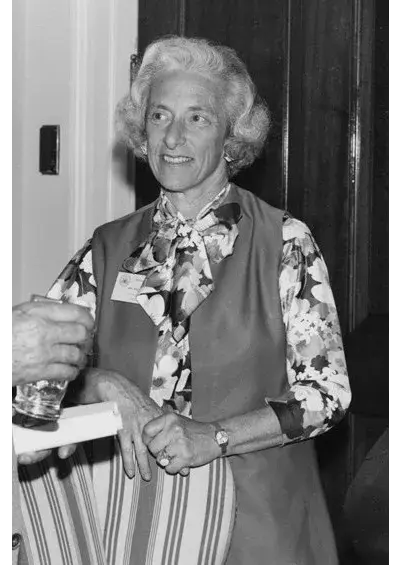
Barbara Wertheim Tuchman was an American historian and author. She won the Pulitzer Prize twice, for The Guns of August (1962), a best-selling history of the prelude to and the first month of World War I, and Stilwell and the American Experience in China (1971), a biography of General Joseph Stilwell.
