Alfred, Lord Tennyson Quotes
Are God and Nature then at strife, That Nature lends such evil dreams? So careful of the type she seems, So careless of the single life; ... 'So careful of the type', but no. From scarped cliff and quarried stone She cries, 'A thousand types are gone: I care for nothing, all shall go' ... Man, her last work, who seemed so fair, Such splendid purpose in his eyes, Who rolled the psalm to wintry skies, Who built him fanes of fruitless prayer, Who trusted God was love indeed And love Creation's final law- Tho' Nature red in tooth and claw With ravine, shrieked against his creed.
Tennyson, Alfred. In Memoriam. Edward Moxon, 1850, pp. 79-81.

Laymen look at nature fondly and personify “Mother Nature” as kindly and beneficent. However, scientists have a more dispassionate view of nature and see it as a combination of forces that would kill most life-forms unless there is a combination of behavior and evolution to resist the normal forces of nature. While man has been responsible for the termination of a number of species, well over 99 percent of all the animal species that have ever lived are extinct today and that has been all “natural”. Schrodinger explains that nature is not a positive force, and in reality is the opposite—every species has to overcome nature and what is natural in order to survive.


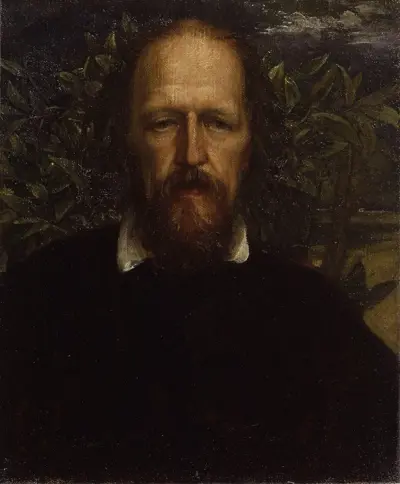
Alfred Tennyson, 1st Baron Tennyson FRS was a British poet. He was the Poet Laureate during much of Queen Victoria's reign and remains one of the most popular British poets. In 1829, Tennyson was awarded the Chancellor's Gold Medal at Cambridge for one of his first pieces, "Timbuktu". He published his first solo collection of poems, Poems Chiefly Lyrical in 1830. "Claribel" and "Mariana", which remain some of Tennyson's most celebrated poems, were included in this volume. Although decried by some critics as overly sentimental, his verse soon proved popular and brought Tennyson to the attention of well-known writers of the day, including Samuel Taylor Coleridge. Tennyson's early poetry, with its medievalism and powerful visual imagery, was a major influence on the Pre-Raphaelite Brotherhood.
