Maryland Quotes
Any person or persons whatsoever, traveling beyond the limits of the county wherein they reside, shall have “a pass under the seal of said county
In times of crises in America is has been suggested that people should carry official identification papers and documents. These proposals have always usually been resoundingly rejected and perceived as “un-American.” It was associated with Nazi Germany during WWII. However early Maryland had such a law, the purpose of which was to discourage runaway slaves. Anyone without papers was “picked up” and held as a runaway.
Maryland, Law, 1715
Sourced by: Eigen's Political and Historical Quotations

The Federal Fugitive Slave Act required all in free states to assist owners of escaped slaves to return them to their owners. See realted quotations.


This is an incredibly important political and historical quotation. One of the leading white ministers of Boston, advises all Blacks (and implicitly whites as well) not to cooperate with the Boston Police. Under the Dred Scott and other legal doctrines, the law enforcement mechanism of even Northern, anti Slavery states, would arrest and hold those suspected of being runaway slaves. This included many ex slaves but also many freemen who were then enslaved by the system. Law enforcement was no better than the slave owners and the slave catchers as far as the welfare of Blacks was concerned. The result has been a hostility to and an antipathy to law enforcement in the North who – even in the view of many whites like Parker were not worthy of trust and cooperation. After slavery, law enforcement supported and enforced the Jim Crow discriminatory laws. The resentment and distrust remains.

This clause was superseded by the 13th Amendment {621373}. More and more abolitionists were refusing on ethical and moral grounds to return fugitive slaves. Some states actually passed laws forbidding the return of fugitive slaves and freeing them the second they set foot in the state. Some objected arguing that the law must be enforced and the Constitution obeyed. They had a point, so the solution was to change the Constitution which is what was done in 1865.

What makes this quotation so historically interesting is that the abiding by the Supreme Court’s decisions on constitutionality was even an issue. It was because of the terrible Dred Scott decision which required Northern States to return fugitive slaves to their owners despite the constitutions of those states which stated that all men were free. A substantial part of the Democratic Party was the “solid South” and the return of fugitive slaves was one of the major issues of the 1860 Presidential Election. Ironically, the Southern States were arguing AGAINST states’ rights when the Northern States’ laws and Constitutions made fugitive slaves free the minute they set foot in the state.
Parker and other escaped slaves in Christiana fought off slave catchers and killed the slave owner leading them. Charged with treason, he escaped to Canada with his family and lived there the rest of his life. While not a polished writer, after he himself had escaped and went to Christiana and leaned to read and write. He wrote this narrative of his life as a slave—one of the few written works we have from slaves.
Parker and other escaped slaves in Christiana fought off slave catchers and killed the slave owner leading them. Charged with treason, he escaped to Canada with his family and lived there the rest of his life. While not a polished writer, after he himself had escaped and went to Christiana and leaned to read and write. He wrote this narrative of his life as a slave—one of the few written works we have from slaves.


The Planter had only two guns of its own, but was carrying a cargo of guns and ammunition that was to be delivered to the Confederate forts along the South Carolina coast. Smalls was then hired by the Union Navy as a Pilot and he engaged in a number of battles where he performed so well that he was transferred to the army which ran its own warships and made a Captain of the Vessel and achieved the rank of General although his duties were always at sea.


There was little thought of emancipating slaves or their value to the South by the senior officers of the Union Army at the beginning of the war. The Secretary of War however changed that. See {629184}.

There was little thought of emancipating slaves or their value to the South by the senior officers of the Union Army at the beginning of the war. The Secretary of War changed that. See {629183}for a typical Union General’s view at the beginning of the war.


In the early days of the Civil War slaves who escaped and reached the Northern lines were routinely returned to their Southern owners as the Fugitive Slave Act required. The first actual emancipation of the Civil war was not the President’s proclamation but was Butler who as a Union General ordered that the slaves escaping from Virginia no longer be returned. He was accused of violating the then existing law, however he had a legal rationale which hoisted Virginia on its own petard.


This law required the treatment of Blacks as whites were then treated with respect to indentured servitude—a limit of 10 years after which the person would be free. However, this law was poorly enforced. The “General Court” was the name for the legislature of the Rhode Island colony.


The Federal Fugitive Slave Act required all in free states to assist owners of escaped slaves to return them to their owners. The reaction in the North to the Fugitive Slave Act was extensive and even violent. See related quotes.
This is an important quotation because it shows that slavery was the principle reason that the South succeeded and began their rebellion. In the early 20th century, there was a movement to make the Confederacy and the rebellion more noble by promoting the idea that the Civil War was fought by the South for more lofty reasons such as States Rights, Original Construction, different economic philosophies and the like. This was a more noble cause then the right to deny other human beings their rights, to own other human beings who they could beat, torture, sexually use and even murder them was a pretty selfish and demeaning reason to have started a rebellion that would then cost more Americans their lives than any other American conflict. The succession documents and others of the Southern States and the Confederacy make it clear that slavery was THE issue and fleeting references to any of the others were only made to complain about the potential effect on abolition and the refusal of the abolitionist states to cease aiding and protecting fugitive slaves.
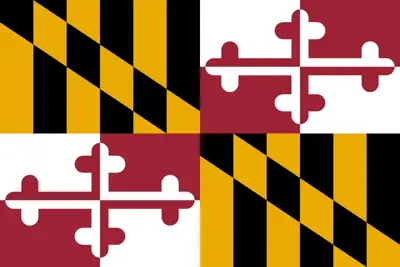
Maryland (US: /ˈmɛrələnd/ (listen) MERR-ə-lənd) is a state in the Mid-Atlantic region of the United States, bordering Virginia, West Virginia, and the District of Columbia to its south and west; Pennsylvania to its north; and Delaware and the Atlantic Ocean to its east. Baltimore is the largest city in the state and the capital is Annapolis. Among its occasional nicknames are Old Line State, the Free State, and the Chesapeake Bay State. It is named after the English Queen Henrietta Maria, known in England as Queen Mary, who was the wife of King Charles I.
