Hugo Black Quotes
Anonymous pamphlets, leaflets, brochures and even books have played an important role in the progress of mankind. Persecuted groups and sects from time to time throughout history have been able to criticize the oppressive practices and laws either anonymously or not at all... It is plain that anonymity has sometimes been assumed for the most constructive purposes.
Hugo Black, 1886-1971, U. S. Senator (Democrat, AL), U. S. Supreme Court Justice, Tally v. California, 1960
Sourced by: Eigen's Political and Historical Quotations


This paraphrased quote originated with Martin Luther King, Jr. See related quote.

In November of each year protesters gather at Fort Benning, the site of the U. S. Army School of the Americas. The School provides training for Latin American Military Officers in Counter-Insurgency Training. The graduates of the school have included some of the worst Latin American killers and torturers (See {41061} for example) who rose to positions of power in their lands. It has also included many leaders who did not ever resort to war crimes and atrocities and also became leaders of their countries. It has been an institution of great controversy since it was discovered that the school at one point taught methods of interrogating insurgents that were tantamount to torture. Defenders of the school claim that but for the school, the military atrocities would have been worse and that it contributed to more human and democratic governments in the Americas. The annual protest has attracted more than 16,000 protesters, some of whom—like Bourgeois—have been guilty of trespass and interfering with a government facility and have served jail terms for those violations.

Referring to a controversial book, Sur la Creation du Monde by Becourt:


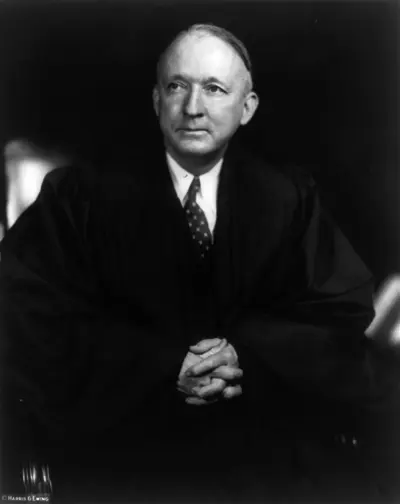
Hugo Lafayette Black was an American lawyer, politician, and jurist who served as a U.S. Senator from 1927 to 1937 and as an Associate Justice of the Supreme Court of the United States from 1937 to 1971. A member of the Democratic Party and a devoted New Dealer, Black endorsed Franklin D. Roosevelt in both the 1932 and 1936 presidential elections. Having gained a reputation in the Senate as a reformer, Black was nominated to the Supreme Court by President Roosevelt and confirmed by the Senate by a vote of 63 to 16 (six Democratic Senators and 10 Republican Senators voted against him). He was the first of nine Roosevelt appointees to the Court, and he outlasted all except for William O. Douglas.
