Graham Greene Quotes
And when we love our sin then we are damned indeed.
Greene, Graham. The Power and the Glory. William Heinemann, 1940.


The Spanish had brought the potato back from the New world in the 16th century. However, Europeans did not change their food customs easily and the potato was not a major food. The fact that it was always in the dirt did not give an aura of cleanliness. The exact theology of the Church causing such opposition to the potato may have been the fact that eating the clean green leaves would sicken humans and sometimes kill them. Another theory was brought on by the Little Ice Age which caused the usual grain crops to fail. The cold weather was clearly a punishment by God for man’s sins. However, the potato would survive the very cold winters when God wanted the people’s crops to fail. Therefore, the Devil must be protecting the potato and thwarting Gods will. Hence, it was the Devil’s plant. The Little Ice Age was so extreme that there was almost no food available for the winter and starvation—the wrath of God—was rampant. People in desperation turned to the Devil’s plant and it saved millions of lives. Shortly, in countries like Ireland, the potato became the major source of food and nutrition, despite the church. However, after a while the prelates were starving also, and decided that the potato might not be the Devil’s plant after all. The king of France would publicly eat potatoes to get his people to plant and eat the new crop which had saved Germany and other parts of Europe.


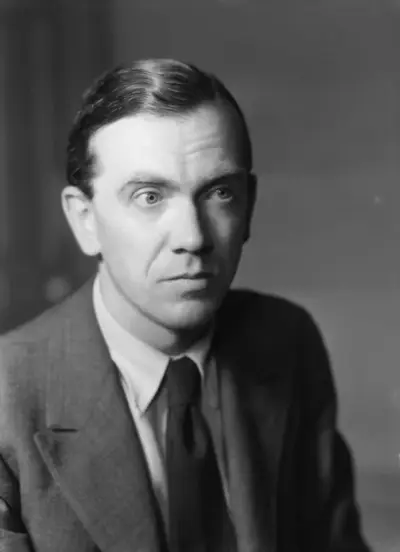
Henry Graham Greene OM CH was an English writer and journalist regarded by many as one of the leading English novelists of the 20th century. Combining literary acclaim with widespread popularity, Greene acquired a reputation early in his lifetime as a major writer, both of serious Catholic novels, and of thrillers (or "entertainments" as he termed them). He was shortlisted, in 1966 and 1967, for the Nobel Prize for Literature. Through 67 years of writing, which included over 25 novels, he explored the ambivalent moral and political issues of the modern world.
