John Marshall Harlan Quotes
And what are they doing now?
See {618653} to see the origins of the justices viewing pornography.
John Marshall Harlan, 1899-1971, U. S. Supreme Court Justice, Question of his law clerk when the court and their clerks were viewing a pornographic film that was the focus of a censorship case
Sourced by: Eigen's Political and Historical Quotations

The justices as a result viewed the ostensibly pornographic films.

She was tried by the Puritan religious and civil court for heresy. She started with Bible Study classes in her home and drew a substantial following. The clergy at the time were threatened and outraged. It was one thing for a woman to teach Bible Study to other women, but to also have men with the women was too much. The decision of the court was that she was banished from the colony. John Winthrop, Governor of the Massachusetts Bay Colony, presiding, answered: "Say no more. The Court knows wherefore, and is satisfied." See {584754}. In 1987, Massachusetts Governor Michael Dukakis pardoned Anne Hutchinson, revoking the order of banishment by Governor Winthrop 350 years earlier.

Arguing for greater restrictions on pornography:

Often misquoted as ‘utterly without redeeming social value.’

Supporting government curbs on pornography:


Tinker referred to the Supreme Court Case of Tinker v. Des Moines where the court ruled that school children had Constitutional rights as well as adults. It was not possible to have a blocking system that would keep “improper” or “indecent” internet sites from library or school computers. Even if it could, the appropriate material for a 17 year old to see and a 5 year old were very different. The blocking software never worked well. Computer sophisticated students would pride themselves by showing how they could evade the blocking software, and at the same time teen age girls would have health sites blocked because they showed how to do breast self-examinations.


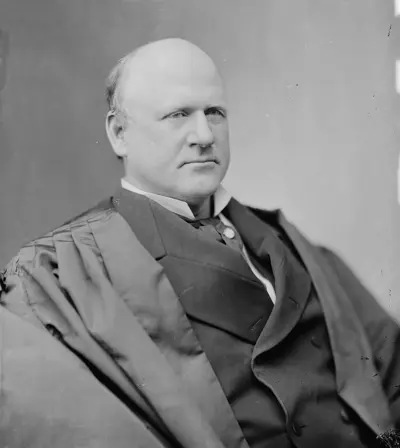
- Born: June 1, 1833
- Died: October 14, 1911
- Nationality: American
- Profession: Judge
John Marshall Harlan was an American lawyer and politician who served as an associate justice on the U.S. Supreme Court. He is often called "The Great Dissenter" due to his many dissents in cases that restricted civil liberties, including the Civil Rights Cases and Plessy v. Ferguson. Many of Harlan's views expressed in his notable dissents would become the official view of the Supreme Court starting from the 1950s Warren Court and onward. His grandson John Marshall Harlan II was also a Supreme Court justice.
