Christopher Gadsden Quotes
And, Mr. Speaker, if the Governor and Council don't see fit to fall in with us, I say let the general duty law, and all, go to the devil, sir, and go about our business.
McCrady, Edward. The History of South Carolina under the Royal Government, 1719-1776. The Macmillan Company, 1899, p. 355.


Although the Professor was often right about this technique, at the time he made this statement, the Clinton administration was actually cutting spending and using much of the revenue to pay for the deficit—just the opposite of what the Professor was worried about. It was successful and the deficit was eliminated and surpluses were projected. However the succeeding administration more closely followed the professor’s pattern and increased spending enormously for serious needs, but also cut taxes, so that we went during the Bush administration from the largest projected surplus in American history to the greatest deficit in American history.


He and Bowles were the two leaders of the Presidential National Commission on Fiscal Responsibility and Reform. The commission recommendations to put the nation on a sound financial footing involved sacrifice by almost every sector of American society—everyone would have to give up something that they valued. So the initial reaction of almost every interest group was to oppose the plan. Over time however, there was a realization that unless the burden would be borne by some and not by others, the plan was reasonably fair. It illustrates the initial reaction of Americans to reform proposals is to retain all the benefits that they have and have others give up their benefits.


He told the government that the bank was 7 billion Euros short, and after much soul searching, the Irish government agreed to assume the debts of the bank lest all the depositors would only get a small fraction of their deposits back. However, the real deficit that the Irish government had to cover was many times the 7 billion. This led to the complete collapse of the Irish economy. Bowe and the other bank officials maintained that they thought the deficit was only 7 billion when they told that to the government. Four years later, confidential audio tapes of some telephone conversations between Bowe and other bank officials turned up and it was clear that Bowe had picked the 7 billion number out of thin air. It was a number that Bowe thought would be large enough that the Government would have to bail the bank out, but not so large that the government officials might conclude that the bailout cost was too high and it would be better to let the bank fail. By 2013 neither Bowe or any of the other Anglo Irish Bank officials had gone to jail or even been indicted. But millions of Irish citizens had their personal and business economies destroyed. See {635438} for a reaction to the exposure of the meeting.


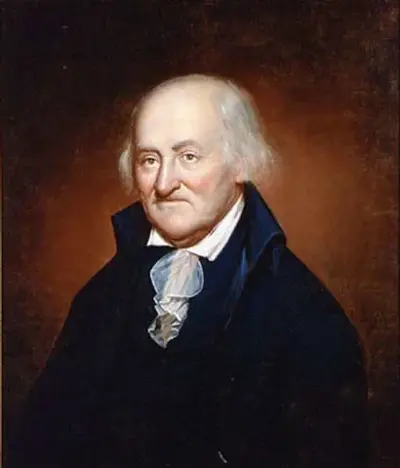
Christopher Gadsden was the principal leader of the South Carolina Patriot movement during the American Revolution and a soldier, politician and slave owner from South Carolina. He was a delegate to the Continental Congress, a brigadier general in the Continental Army during the American Revolutionary War, Lieutenant Governor of South Carolina, a merchant, and the designer of the Gadsden flag.
