Henry II Quotes
And let the sheriffs who have arrested them bring them before the justice without any other summons.
This assize is generally considered to be the first written specification of due process in English Common Law.
Henry II, 1133-1189, King of England, Assize of Clarendon, 1166
Sourced by: Eigen's Political and Historical Quotations


Americans are divided as to whether this should be encouraged and helped or not.

Jackson was then a rising young military officer and politician. He had been found guilty of abusing his power to declare and implement martial law. He was a character. He bragged about his “respectful submission” to the law by paying the fine, but ignored the legal violations he committed to be sentenced to the fine.


The two law enforcement officers had testified that they arrested demonstrators who had “come to break the law” and had not at that point broken any laws.

Charles I was tried by Parliament but at the time there was the concept of Royal Impunity and there was no existing crime that he could be charged with despite the murder of many of his citizens. Cooke established the legal precedent making Tyranny a crime. See {624032}.


Rynnymede was the location in England where the Barons of the realm confronted King John and forced him to sign the Magna Carta. This was the first event that limited the powers of the King


It is surprising that these ideas would come from one of the most autocratic powerful monarch in the world at the time. However there were many very liberal influences on her from Europe. This set of proposals she even sent to Voltaire to get his feedback and criticism.


This idea was incorporated in the FBI's "Most Wanted" list.
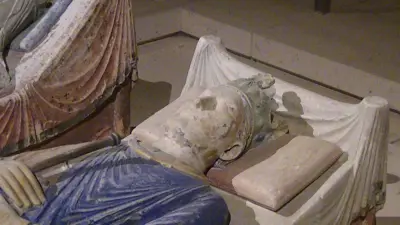
Henry II, also known as Henry Curtmantle (French: Court-manteau), Henry FitzEmpress or Henry Plantagenet, was King of England from 1154 until his death in 1189. He was the first king of the House of Plantagenet. King Louis VII of France made him Duke of Normandy in 1150. Henry became Count of Anjou and Maine upon the death of his father, Count Geoffrey V, in 1151. His marriage in 1152 to Eleanor of Aquitaine, whose marriage to Louis VII had recently been annulled, made him Duke of Aquitaine. He became Count of Nantes by treaty in 1185. Before he was 40 he controlled England, large parts of Wales, the eastern half of Ireland and the western half of France; an area that was later called the Angevin Empire. At various times, Henry also partially controlled Scotland, Wales and the Duchy of Brittany.
