Allen Dulles Quotes
An intelligence officer in the field is supposed to keep his home office informed of what he is doing. That is quite true, but with some reservations, as he may overdo it. If, for example, he tells too much or asks for instructions, he is likely to get some he doesn't relish.
Allen Welch Dulles, 1893-1969, Director, CIA, Quoted in Mosley, Dulles, 1978
Sourced by: Eigen's Political and Historical Quotations

Silberman-Robb WMD Commission


He was appointed by President Nixon to head a "blue ribbon panel" to review the Department of Defense, and announced the conclusions:


The CIA did not have a long tradition. It was created after WWII when the OSS was are espionage organization had been disbanded In the early days of the Cold War, the CIA went rogue and engaged in covert activities without the knowledge and approval of the President and his cabinet. General Maxwell Taylor conducted a thorough investigation and the agency was brought under control. There hav been several more incidents since then and every few years there have been additional scandals of unauthorized operations which were harmful to American interests and values. In a democracy it is always hard to control a secret organization. Actually, at the beginning of WWII, we had almost no espionage capability and President Roosevelt had a series of friends who provided him with intelligence until William Donavan had time to establish the OSS which did such a wonderful job.

When Bob Casey was the CIA Director, he the declassification of all the operational files of the WWII Office of Strategic Service. The huge collection is referred to as Record Book 2.6


Most of the successful intelligence agency administrators think that Cheney and some others are absolutely wrong that there should not be any discussion. There are times, of course, where secrecy is critical, but that does not mean that there cannot be classified discussion and coordination. Almost every one of the disastrous intelligence agency fiascos, could have been avoided if there were more and wider discussion in the planning. In many cases, Chaney, William Casey and others who hold their view prefer no discussions is that lawyers cannot block the operation on grounds of illegality. Or other agencies cannot get their priorities into the mix. If the NSA had discussed their plan to hack into the telephone calls of our most important allies with the State Department, the plan might not have gone through or if it had, the President would have been consulted. The Bay of Pigs was based on a set of assumptions that were not true and our government had a number of experts who could have debunked the assumptions the CIA planners were counting on which did not pan out.


Expressing concern over President Obama extending some of the American citizen entitled privacy rights to foreigners. He was concerned that this might inhibit our spying efforts.

The American Embassy in Berlin had wiretapped the telephone and telegraph wires of the German Foreign Ministry. The man who did that was hired by Secretary of State Lansing as the first employee of the new unit.

Intelligence agents tend to prefer covert activities to the less dramatic, non-exciting, activity of gathering and analyzing intelligence. Most national intelligence services tend to enlarge their portfolio to include covert activities regardless of what the national leaders intended. Because of the secrecy, they can often get away with this.

This is one of the reasons that Europe had many security problems during that period. Some of the countries had very poor intelligence services. Even the ones that did have quality intelligence, tended to avoid sharing intelligence with their neighbors.
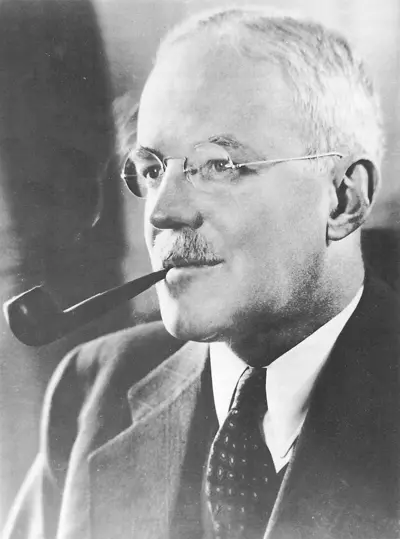
Allen Welsh Dulles was the first civilian Director of Central Intelligence (DCI), and its longest-serving director to date. As head of the Central Intelligence Agency (CIA) during the early Cold War, he oversaw the 1953 Iranian coup d'état, the 1954 Guatemalan coup d'état, the Lockheed U-2 aircraft program, the Project MKUltra mind control program and the Bay of Pigs Invasion. He was fired by John F. Kennedy over the latter fiasco.
