Murray Rothbard Quotes
An attempt by the Mongols to introduce paper money in Persia in the twelfth and thirteenth centuries flopped because no one would accept it. The public had no confidence in the paper money despite the awesomely coercive decrees that always marked Mongol rule.
Rothbard, Murray N. What Has Government Done to Our Money? Pine Tree Press, 1963.

At the time, a bank note—paper money issued be a private bank—was not backed by any gold or silver and was not insured bym the government. A bank could print as much as they wanted, so it was always worth less as the further you were from the particular issuing bank, the less you could get your bank note, because no one knew whether or not the issuing bank would redeem the note or even be in existence. So every private bank note had diminished value for the public. However, carrying gold and silver around and making change for precious metals was difficult and often impractical. So people used banknotes. The same thing happens with credit cards today. The merchant has to pay a fee to the credit card company and the bank and therefore charges us more for whatever we buy. But most consumers and merchants are willing to pay the difference to obtain the convenience of the credit card,


America had a difficult early history with money—especially paper money which had been issued by private banks but were trusted by few. Paper money had for the first time had been issued by the Federal Government during the Civil War. Many saw it as a wartime measure but not a good practice to follow. Garfield, along with many other leaders thought that it was not constitutional for Congress to issue paper money. Others prevailed as the need for a lighter and more practical form of currency was necessitated by a growing economy. Coins for large transactions between businesses especially was very awkward when chests of coins had to be delivered to pay for cattle, produce or manufactured goods at the wholesale level.


The alternative would have been for the colonies to borrow English money at high interest rates and use that. Or use money from private banks (which occurred later.) Many conservatives are today a little shocked that some of the American Colonies just printed money with no backing but it worked—at least at the local level. A Boston Bank for example, would take a large commission for a Bostonian to convert Pennsylvania money into Massachusetts money. So it was not a very good system for trade between colonies and International trade. But English money was used for that. The colonists pragmatically got the “best of both worlds” and paid as little interest as they needed to. This system is essentially what we use today on a national scale with no gold or silver backing of the money.


President Richard Nixon, a conservative Republican did not agree with this view as it was he who led America to abandon the gold standard to back its money.


This is the first major history of banks written in the United States.
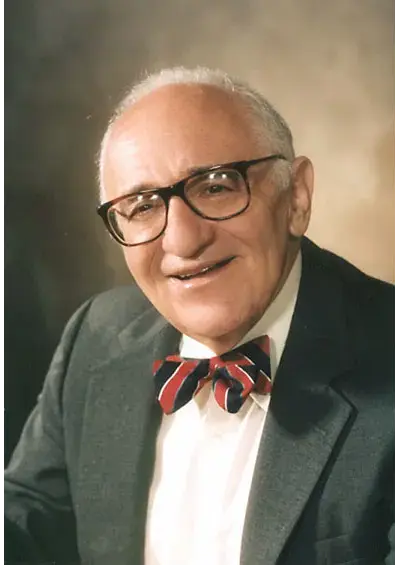
Murray Newton Rothbard was an American heterodox economist of the Austrian School, economic historian and political theorist. Rothbard was the founder and leading theoretician of anarcho-capitalism, a staunch advocate of historical revisionism and a central figure in the 20th-century American libertarian movement. He wrote over twenty books on political theory, revisionist history, economics, and other subjects.
