Michael Gerson Quotes
Americans have generally gotten what they wanted on foreign policy issues—and they now ruthlessly punish those who implemented their will.
Michael John Gerson, Presidential Speechwriter (Republican), “The isolationist fantasy”, The Washington Post, October 14, 2014
Sourced by: Eigen's Political and Historical Quotations


Turkey had massacred many Armenians. The British government protested strongly and made their views known to the Turks. The result was resentment by Turkey, who regarded the matter as a purely internal affair, and the curtailment of British economic interests in the area.
The American concepts of democracy and human rights have been resented when U. S. policy advocated other nation’s adhering to them.

Announcing his opposition to the covenant of a League of Nations:

See Benedict Spinosa for an earlier absense or war view. Also, JFK more recently.


Kissinger had observed in his unpopular view that he was saying exactly what the George W. Bush administration had officially said on several occasions. This response is quoted by those who use it as an example of how low the reputation of the George W. Bush administration had sank with America’s foreign allies. Kissinger was seen as a much more important and influential factor despite the fact that he had been out of office for over two decades. At the time, many American allies had given up on Bush and because he was so unpopular with Americans as well as foreigners, they assumed that his statements would not represent American policy or opinion as soon as Bush’s term was over. The new President of whichever party would, it was assumed, repudiate most of the Bush actions and try and rebuild America’s shattered reputation. In that scenario, Kissinger’s views would not only be more representative of American positions than that of Bush and his diplomatic representatives.


The railroads were nationalized for WWI and he ran them all as a government official


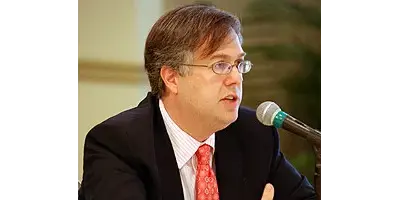
Michael John Gerson is an op-ed columnist for The Washington Post, a Policy Fellow with One Campaign, a visiting fellow with the Center for Public Justice, and a former senior fellow at the Council on Foreign Relations. He served as President George W. Bush's chief speechwriter from 2001 until June 2006, as a senior policy advisor from 2000 through June 2006, and was a member of the White House Iraq Group.
