Henry Cisneros Quotes
Americans are a can-do people, an enthusiastic people, a problem-solving people. And when given a direction and given a plan, they'll sign on.
Cisneros, Henry. Interwoven Destinies: Cities and the Nation. W.W. Norton & Company, 1993, p. 15.


This practice credited to the Americans in WWII while the German’s waited for instructions, was not an American invention. It appears to have originated with one of the greatest of the Russian military leaders.


Generally, the American military is much more optimistic of its ability to accomplish its objectives as that it the way they have been trained. The General warns that the same attitude will make them more optimistic and willing to tackle a very difficult if not impossible problem than most would be. So civilians in America have to question what they are doing. At the same time, there have been a number of highly sophisticated military officers who have both a military and civilian perspective and education. They tend to be more realistic and at times argue against military deployments and missions that are being considered. However, once deployed and committed, it is culturally difficult or impossible for a member of the military to be pessimistic about the eventual


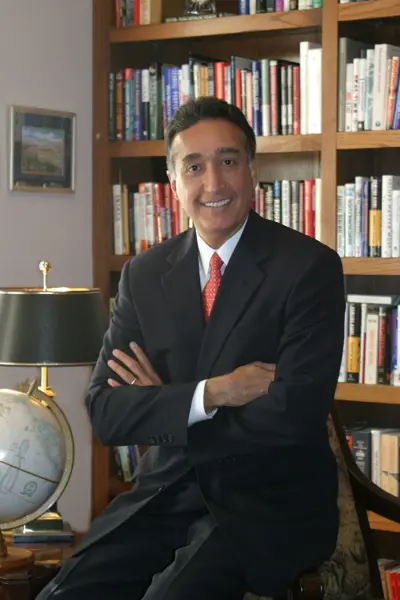
Henry Gabriel Cisneros is an American politician and businessman. He served as the mayor of San Antonio, Texas, from 1981 to 1989, the second Latino mayor of a major American city and the city's first since 1842 (when Juan Seguín was forced out of office). A Democrat, Cisneros served as the 10th Secretary of Housing and Urban Development (HUD) in the administration of President Bill Clinton from 1993 to 1997. As HUD Secretary, Cisneros was credited with initiating the revitalization of many public housing developments and with formulating policies that contributed to achieving the nation's highest ever rate of home ownership. In his role as the President's chief representative to the cities, Cisneros personally worked in more than two hundred cities spread over all fifty states. Cisneros' decision to leave the HUD position and not serve a second term was overshadowed by controversy involving payments to his former mistress.
