Joseph Stiglitz Quotes
America will suffer under Trump.
Stiglitz, Joseph E. People, Power, and Profits: Progressive Capitalism for an Age of Discontent. W. W. Norton & Company, 2019.


Ford went on to itemize some of the major problems then facing the nation. This is one of the very few times that an American President was so candid and did not try to minimize the extent of the difficulties. This might have been the result of Ford’s character which tended to be very straightforward and without guile. At the same time, the problems were not the result of his policies but those of Richard M. Nixon who had been forced to resign under disgrace and had few followers who would be insulted.

In the 2016 Presidential Elections, there were a few close states. However, in most states one of the candidates won by a signficiant margin proucung some states that supported Trump and some who opposed Trump--hence "Divided States of America".


Trump, in the 2016, Presidential Campaign viciously attacked not only his Republican opponents for the Republican Nomination, but almost every other Republican leader, the Republican National Committee members and the “Establishment Republicans.” He not only called them names, and ridiculed them and their families, but he lied extensively about each of his opponents and the Republican National Committee. Trump also alienated women, Hispanics, Muslims across the country. The Republican party was fractured and there were great resentments. Many blamed Tump for the Party cleavage. However, what is interesting about this quotation is that Roy admits that there were huge cleavages within the party as the Result of the Tea Party Republicans intransigence before Trump entered the campaign. He just took advantage of it and used it to his advantage. Roy at this time saw the Republican splits and resentments as too deep to be able to bring the party together shortly. The split persevered.


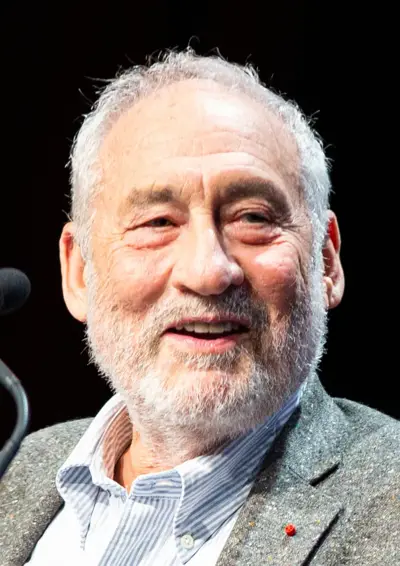
Joseph Eugene Stiglitz is an American economist, public policy analyst, and a professor at Columbia University. He is a recipient of the Nobel Memorial Prize in Economic Sciences (2001) and the John Bates Clark Medal (1979). He is a former senior vice president and chief economist of the World Bank and is a former member and chairman of the (US president's) Council of Economic Advisers. He is known for his support of Georgist public finance theory and for his critical view of the management of globalization, of laissez-faire economists (whom he calls "free-market fundamentalists"), and of international institutions such as the International Monetary Fund and the World Bank.
