Ellsworth Huntington Quotes
America forms the longest and straightest bone in the earth's skeleton.
Huntington, Ellsworth. The Red Man's Continent: A Chronicle of Aboriginal America. Yale University Press, 1919.


He was the first what man to cross the continent. His exploration was (and is) the legal basis for the Canadian claim on the Northwest Territory

Jefferson had insisted that the expedition was purely scientific. The fact that it was lead by two military officers and involved soldiers led many to suspect the expedition was an “invasion” of what was then officially Spanish Territory. The very small size of the expedition made the concept of an expansion effort seemingly ridiculous to many. Jefferson was never public about his hopes fort the eventual possibilities but Martinez seemed to have gotten it right but was paid little heed.


This phrase was originally an ancient Roman one: A mari usque ad mare.

The word “art” meant the mechanical arts of engineering and technology. This amazing quotation predicts the Panama Canal and many of the changes man has made of the earth. A few are still too come. Clinton was then a young man and secretary to the Governor.

Without much fanfare, the United States was beginning to deploy naval power internationally.


This was one of the first suspicions that America and Europe were connected as a single content in earlier times. That supercontinent is now called Laurasia. Atlantis was a fabled island that the story goes was sunk with its whole civilization. It has never been found and may not have ever existed. De Buffon’s mechanism for the Ocean was clearly wrong but the separation of Laurasia started to occur hundreds of millions of years ago. The continents are still moving—only inches each year.

On his many trips between England and America he used the time by sampling the water temperature and different depths—he invented a gadget that would make that easier and he and his cousin saved his data and then created a map showing the current which was called on the map the Gulf Stream. Not only is the name still in use, but the map was amazingly accurate compared to modern measurements with advanced technology.


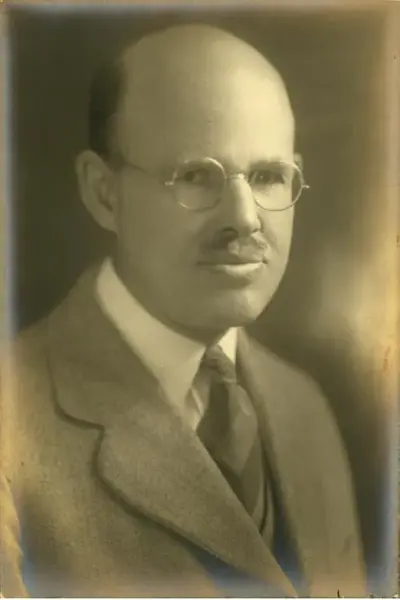
Ellsworth Huntington was a professor of geography at Yale University during the early 20th century, known for his studies on environmental determinism/climatic determinism, economic growth, economic geography, and scientific racism. He served as President of the Ecological Society of America in 1917, the Association of American Geographers in 1923 and President of the Board of Directors of the American Eugenics Society from 1934 to 1938.
