John Foster Dulles Quotes
Am deeply disappointed. Your campaign had dignity and elevation and was in the best American tradition. I am rather frightened by the influences which prevented it from succeeding.
John Foster Dulles, 1888-1959, U.S. Secretary of State (Republican), U.S. Senator (Republican, NY), Consolation telegram to Thomas E. Dewey upon his loss of the presidency to Harry S Truman, 1948
Sourced by: Eigen's Political and Historical Quotations

the presidency against Harry Truman. Then a Republican campaign aide to Dewey

Dulles was slated to become Secretary of State when Dewey won the presidency. Dewey was the overwhelming favorite, yet Truman upset Dewey. Four years later, Dulles became Eisenhower's Secretary of State.


Utley made the statement on election night of 1948 when HG Kaltenborn and must other pundits observed that Truman’s early lead was not big enough to overcome the results of the rural precincts which were slower to report and most assumed went heavily for Dewey. Utley, however, had conducted his own exit poll in the Chicago region and found that people who supported Dewey, when they got into the voting booth just could not support him. He appears to be the first journalist to call the election for Truman.


Based on incomplete returns from the previous night, the newspaper staff concluded that Truman lost, and printed the "news." A famous picture shows Truman gleefully holding up the newspaper with its headline for all to see. Truman said on that occasion: "That ain't the way I heard it."

Dewey was the overwhelming favorite to defeat President Harry Truman who was very unpopular at the time. Everyone assumed that Dewey was packed and ready to leave for Washington.

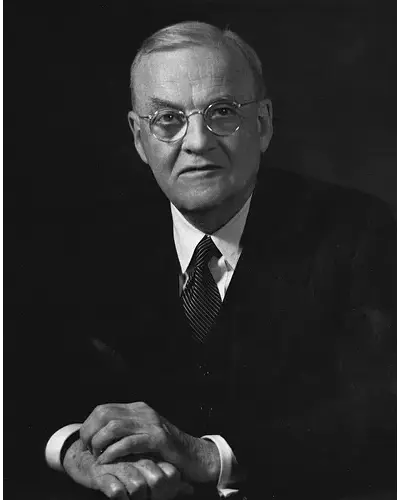
John Foster Dulles was an American diplomat, lawyer, and Republican politician. He served as United States Secretary of State under President Dwight D. Eisenhower from 1953 to 1959 and was briefly a U.S. Senator for New York in 1949. He was a significant figure in the early Cold War era, advocating an aggressive stance against communism throughout the world.
