Fritz Kreisler Quotes
Although I had resigned my commission as an officer two years before, I immediately left Switzerland, accompanied by my wife, in order to report for duty. As it happened, a wire reached me a day later calling me to the colors.
Kreisler, Fritz. Four Weeks in the Trenches: The War Story of a Violinist. Houghton Mifflin Company, 1915, p. 1.


This referred to ships being torpedoed by the German U-Boats in the poster.


Just 7 months earlier the King had made a direct appeal to the people for enlistment in the military—See {587166}. The response was very good, but the First World War developed in such a way that huge manpower resources were needed and the King had to reluctantly assent to a military draft.

Saddam claimed to his people that Iraq had essentially won the Gulf War as they were stronger afterwards than ever before and they had been able to suppress the Kurds and the Shiites with the helicopters and arms with which the emerged from the war and had been allowed to keep.
The founder was Charles E. Coughlin, 1891-1979, a demagogic Catholic Priest who drafted the principles and invited others to join him. Hundreds of thousands did in this organization which began in idealism, and ended in scandal and hate mongering, so much so that Father Coughlin was ordered off the radio and out of politics by the Catholic Church. The National Union in 1936 had morphed into the Union Party which ran Presidential candidates in the 1936 election. In this principle there were two purposes: First to have the wealthy sacrifice something in time of war. Historically wealth could keep a man from the draft if he so wanted. Second, when the company went to war the argument went it was the rich who could profit who had more political influence and could make the war. This way, they would pay a high price and might oppose war. Many of Coughlin’s followers were pro-German and wanted to keep the country out of the European war.


For a man of God, Davies was a military hawk of his day. See {599233} .


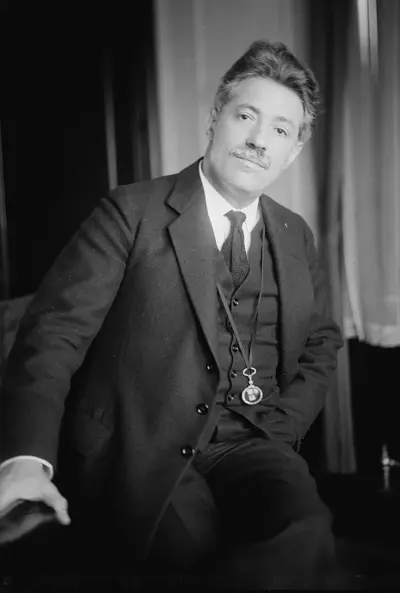
Fritz Kreisler was an Austrian-born American violinist and composer. One of the most noted violin masters of his day, and regarded as one of the greatest violinists of all time, he was known for his sweet tone and expressive phrasing. Like many great violinists of his generation, he produced a characteristic sound which was immediately recognizable as his own. Although it derived in many respects from the Franco-Belgian school, his style is nonetheless reminiscent of the gemütlich (cozy) lifestyle of pre-war Vienna.
