Richard Whately Quotes
All gaming, since it implies a desire to profit at the expense of another, involves a breach of the tenth commandment.
Whately, Richard. Introductory Lessons on Morals. London, John W. Parker and Son, 1855, p. 85.


This view of the world as a zero sum game and the contrasting view of growth producing a win-win situation define the major contrasting political and economic views argued to this day.

Li was one of the leaders urging force to repress the demonstration. He was particularly offended by the Chinese students carrying the large “Statue of Liberty,” believing that this was an overt attempt to destabilize China. This was not known till the publication of the so-called “Tiananmen Square Papers” in 2001. The Chinese government claimed that these were forgeries.

There is a certain similarity to the reaction of modern American men with respect to the Super Bowl.
The Diggers were a religious-economic movement that even today would be considered very radical. They advocated the right of the poor to go onto public lands and farm them—thus the name “Diggers.” Beyond their opposition to the private ownership of land to the exclusion of the poor, Winstanley and the Diggers promulgated another very modern doctrine: That the poor should take the responsibility and have the right to determinine how the society should provide for the poor. A version of this became one of the Mottos of the Poverty Program of 1964. See {616966}.
Often referred to as “The Dean of Black Historians.”

A bronze statue of Lin Zexu was erected in his honor in Chatham Square (Kimlau Square) of New York City's Chinatown.


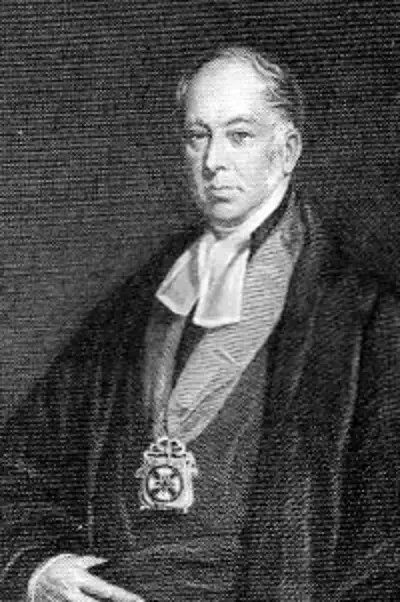
Richard Whately was an English academic, rhetorician, logician, philosopher, economist, and theologian who also served as a reforming Church of Ireland Archbishop of Dublin. He was a leading Broad Churchman, a prolific and combative author over a wide range of topics, a flamboyant character, and one of the first reviewers to recognise the talents of Jane Austen.
