Zhang Zhidong Quotes
Agricultural chemistry was not something that could be readily mastered by farmers, nor could the new machines be easily operated and maintained. Agricultural schools were needed to provide the necessary training. Then, if local gentry and rich households with large landholdings tried new methods—and if the new techniques were effective—the people will naturally follow them.
Zhang Zhidong, 1837-1909, Chinese Governor General of Hubei and Hunan Method by which he introduced American Agricultural Methods and Machines into China, Quoted in Randall E. Stross, The Stubborn Earth
Sourced by: Eigen's Political and Historical Quotations


There were many new scientific agricultural techniques emerging but most farmers knew nothing about them. Garfield wanted the Federal Government to provide education, communications and technical assistance to farmers. However, that was a radical notion and many did not see that as a proper role of the Federal Government. The President gave the example of an early Federal role of establishing lighthouses to protect and assist mariners sailing along the American coasts. Most Americans had accepted helping the maritime industry. Why not assist agriculture? The subsequent Federal role in Agriculture was one of the major factors in making the American farmer the most productive in the world as new techniques would be communicated to farmers rapidly and implemented without much delay.

Executed by the English for his part in the Easter Uprising. This was a creative idea to being technology to bear on small farms. America was exploring cooperatives and other devices of trying to allow people who were not rich and had little or not capital, to utilize the emerging technology that would be so important.


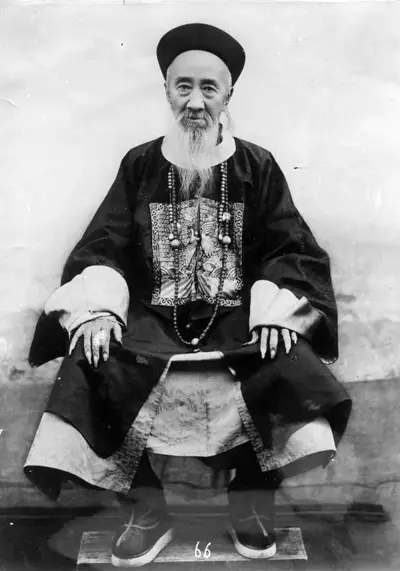
Zhang Zhidong (Chinese: 张之洞) was a Chinese official who lived during the late Qing dynasty. Along with Zeng Guofan, Li Hongzhang and Zuo Zongtang, Zhang Zhidong was one of the four most famous officials of the late Qing dynasty. Known for advocating controlled reform and modernization of Chinese troops, he served as the Governor of Shanxi Province and Viceroy of Huguang, Liangguang and Liangjiang, and also as a member of the Grand Council. He took a leading role in the abolition of the Imperial examination system in 1905. The Red Guards destroyed his tomb in 1966 during the Cultural Revolution. His remains were rediscovered in 2007 and reburied with honors.
