Wolfgang Ketterle Quotes
After earning my Ph.D., I stayed at the Max-Planck Institute as a postdoc, working on laser excitation of Rydberg states of triatomic hydrogen and helium hydride. I also succeeded in analyzing all the emission spectra of helium hydride, which I had discovered during my Ph.D.
Ketterle, Wolfgang. "Wolfgang Ketterle - Biographical." Les Prix Nobel. The Nobel Prizes 2001, edited by Tore Frängsmyr, Nobel Foundation, 2002.


This quotation illustrates a way in which science is frequently at odds with politics. Our politicians realize the importance of scientific research to our standard of living, economy, and quality of life. So they want to support research and development programs. However, budgeting and planning for these in terms of expected or desired results is virtually impossible. So scientific research, especially basic research is not susceptible to the usual planning and monitoring that is so common and effective in construction projects or other applications of science and technology. It is hard to predict when and which scientists will have the next critical idea. It is very difficult to hold scientists or administrators accountable for scientific research results because of this factor. See {624876}.

This is almost the universal belief of scientists—religious or not. The faith of religion, if extended to science, does not give the person the tools of logic, empiricism, and deduction that is so critical for the scientist. The cleric, in contrast, requires faith. Politicians split. There are many who have the outlook of the scientist. However, there are also political ideologues, who want faithful adherence to the doctrine, as the theological leaders does, and does not subject the doctrine to analytic scrutiny.


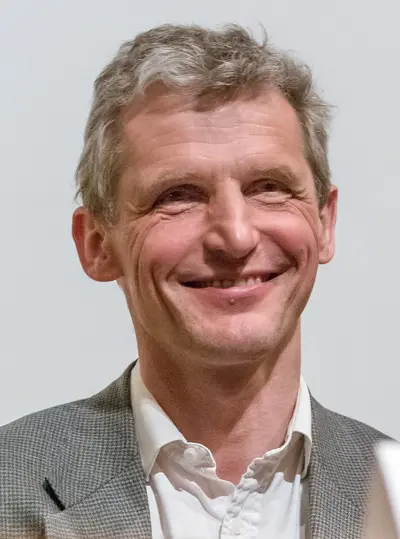
Wolfgang Ketterle is a German physicist and professor of physics at the Massachusetts Institute of Technology (MIT). His research has focused on experiments that trap and cool atoms to temperatures close to absolute zero, and he led one of the first groups to realize Bose–Einstein condensation in these systems in 1995. For this achievement, as well as early fundamental studies of condensates, he was awarded the Nobel Prize in Physics in 2001, together with Eric Allin Cornell and Carl Wieman.
