Fyodor Dostoevsky Quotes
After all, I quite naturally want to live in order to fulfill my whole capacity for living, and not in order to fulfill my reasoning capacity alone, which is no more than some one-twentieth of my capacity for living. What does reason know? It knows only what it has managed to learn (and it may never learn anything else; that isn't very reassuring, but why not admit it?), while human nature acts as a complete entity, with all that is in it, consciously or unconsciously; and though it may be wrong, it's nevertheless alive.
Dostoevsky, Fyodor. Notes from Underground. Translated by Richard Pevear and Larissa Volokhonsky, Vintage Books, 1993, p. 27.


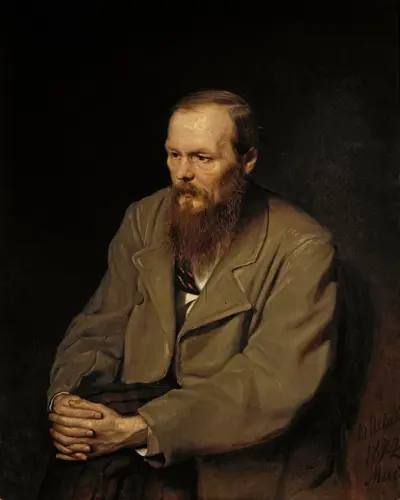
Fyodor Mikhailovich Dostoevsky, sometimes transliterated as Dostoyevsky, was a Russian novelist, philosopher, short story writer, essayist, and journalist. Dostoevsky's literary works explore human psychology in the troubled political, social, and spiritual atmospheres of 19th-century Russia, and engage with a variety of philosophical and religious themes. His most acclaimed works include Crime and Punishment (1866), The Idiot (1869), Demons (1872), and The Brothers Karamazov (1880). Dostoevsky's body of works consists of 12 novels, four novellas, 16 short stories, and numerous other works. Many literary critics rate him as one of the greatest psychological novelists in world literature. His 1864 novel Notes from Underground is considered to be one of the first works of existentialist literature.
