Daniel Bell Quotes
Action is typical of the American style, thought and planning are not; it is considered heresy to state that some problems are not immediately or easily solvable.
Daniel Bell, 1919–2011, Sociologist, Harvard University, Daedalus, Summer 1967
Sourced by: Eigen's Political and Historical Quotations


While the context applied to making business policy decisions, he also advocated it for politics and managing government. If policy makers or managers speculate and then act to fix possible and imaginable problem, they will waste time and resources dealing with eventualities that may never come to pass. A better strategy is to obtain data, analysize that, and fix the problems that we know will occur.

This was very consistent with the programmatic philosophy of his boss, FDR, who campaigned on no specific solutions to the Great Depression but promised to try things and of the did not work, try others. His predecessor, Hoover, would try nothing as most ideas contradicted his philosophy or was not favored by the wealthy business interests of the day.


Technically, the probability has never changed. However, most probabilities are in relation to a specific event or time. A levee may have only a 1% probably of failing in a hurricane but if there are 10 hurricanes a year, the probability that the levee will fail at least once in 30 years is about 50%.

This quotation shows FDR doing something that politicians rarely do. The country was in the midst of the Great Depression and he was running for the Presidency against Herbert Hoover who as President would do little to help the destitute part of the population or improve the economy. Roosevelt did not lay out specific programs which he claimed would fix the problem. He himself really didn’t know for certain what would and what would not. However he promised bold experimentation—trying new things. When he was elected, he was able to fail with one program and just shift to another until enough were successful. But the great contrast was to Hoover who would do little.
Two of the 20th centuries greatest political leaders were Mao Tse-Tung and Franklin Delano Roosevelt. In most respects, these two were polar opposites. However, they had one characteristic in common. They were both willing to try things they were not certain of. If they succeeded, make it a part of the national program. If it failed, try something else. See Mao {642795}.


Ideally problems of government would be prevented by good planning and anticipation. Once the political problem becomes evident, it is usually too late to resolve it well at reasonable cost. Machiavelli warned against waiting. However, he never imagined that a political problem would become evident, and the government officials or legislators would not deal with it and delay attempted resolution. However “kicking the can down the road” became very common in the latter part of the 20th century. By the beginning of the 21st century, the extreme political polarization of Congress had caused so much gridlock that almost no problem could be legislated upon, even well after it had been recognized.


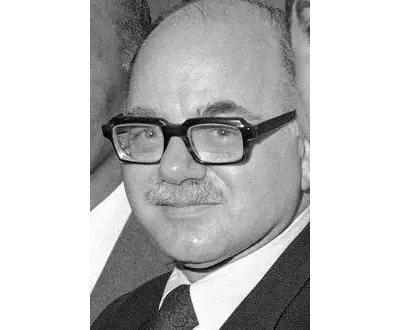
Daniel Bell was an American sociologist, writer, editor, and professor at Harvard University, best known for his contributions to the study of post-industrialism. He has been described as "one of the leading American intellectuals of the postwar era". His three best known works are The End of Ideology, The Coming of Post-Industrial Society, and The Cultural Contradictions of Capitalism.
