Albert J. Nock Quotes
According to my observations, mankind are among the most easily tamable and domesticable of all creatures in the animal world. They are readily reducible to submission, so readily conditionable (to coin a word) as to exhibit an almost incredibly enduring patience under restraint and oppression of the most flagrant character. So far are they from displaying any overweening love of freedom that they show a singular contentment with a condition of servitorship, often showing a curious canine pride in it, and again often simply unaware that they are existing in that condition.
Nock, Albert J. Memoirs of a Superfluous Man. Harper & Brothers, 1943, p. 33.


This audacious general and Queen of one of the Roman Provinces conquered most of the area including Egypt. Then she declared her independence from the Roman Empire itself. A master of multilateral coalition leading, she was able to attract nearby provinces to join her. The Roman Emperor Aurelian himself set out to subjugate Zenobia—the Roman, Latin name. In the first battle, the Romans won a tactical victory for some territory but lost many men. The Emperor asked Bat Zabbai to surrender, but she refused in this famous reply. She was counting on the fact that the Romans would not accept the high losses she was inflicting. See Aurelian’s letter to the Roman Senate {606345}. The Romans did however did pay the price and eventually conquered Bat Zabbai and brought her to Rome as a captive. However she was very much admired by Roman society and after she pledged to not revolt against Rome, she was allowed to live in Rome—but not go back to Syria where she might raise another army. She became a major celebrity of Roman society and married a Roman Senator. Her exploits although well known at the time lapsed into obscurity in that later Roman Christian society did not see her as a fitting Christian female example, and when Islam developed in Syria, she was not considered a model Muslim woman. So a key figure in Roman history was ignored by most of the cultures until recently where the original documentation of the time has been made more widely available.

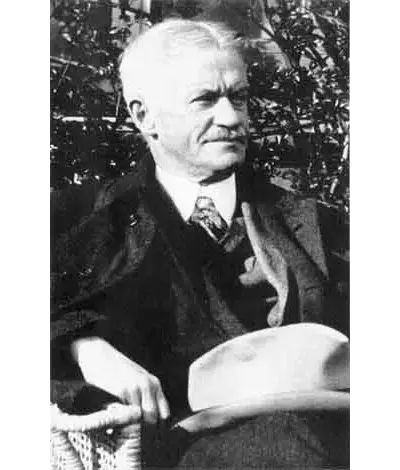
Albert Jay Nock was an American libertarian author, editor first of The Freeman and then The Nation, educational theorist, Georgist, and social critic of the early and middle 20th century. He was an outspoken opponent of the New Deal, and served as a fundamental inspiration for the modern libertarian and conservative movements, cited as an influence by William F. Buckley Jr. He was one of the first Americans to self-identify as "libertarian". His best-known books are Memoirs of a Superfluous Man and Our Enemy, the State.
