John Aubrey Quotes
About Thomas Hobbes: He was 40 years old before he looked on geometry; which happened accidentally. Being in a gentleman's library, Euclid's Elements lay open, and "twas the 47 El. libri I" [Pythagoras' Theorem]. He read the proposition "By God", sayd he, "this is impossible:" So he reads the demonstration of it, which referred him back to such a proposition; which proposition he read. That referred him back to another, which he also read. Et sic deinceps, that at last he was demonstratively convinced of that truth. This made him in love with geometry.
Aubrey, John. Brief Lives. Edited by Andrew Clark, vol. 1, Clarendon Press, 1898, p. 332.


There are many systems of mathematics which are totally contrary to the world as we know and observe it; others, reflect the world as it is known. The latter we use for science. The former exist only in the mathematics world. We have mathematics today of computers that do not exist, universes that can only be imagined and some that are not even imaginable. Sometimes we realize that a mathematical system we thought had no reflection of reality, was really useful in explaining a new physical phenomenon. What is theoretical today, might need to be applied tomorrow.


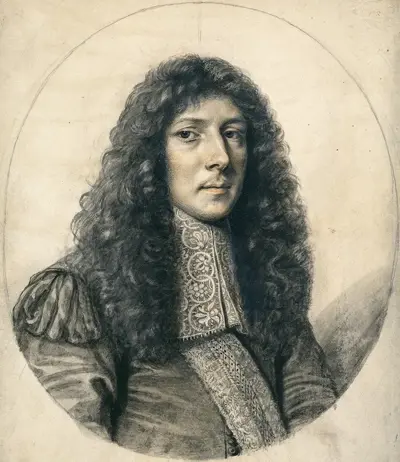
John Aubrey FRS was an English antiquary, natural philosopher and writer. He is perhaps best known as the author of the Brief Lives, his collection of short biographical pieces. He was a pioneer archaeologist, who recorded (often for the first time) numerous megalithic and other field monuments in southern England, and who is particularly noted for his systematic examination of the Avebury henge monument. The Aubrey holes at Stonehenge are named after him, although there is considerable doubt as to whether the holes that he observed are those that currently bear the name. He was also a pioneer folklorist, collecting together a miscellany of material on customs, traditions and beliefs under the title "Remaines of Gentilisme and Judaisme". He set out to compile county histories of both Wiltshire and Surrey, although both projects remained unfinished. His "Interpretation of Villare Anglicanum" (also unfinished) was the first attempt to compile a full-length study of English place-names. He had wider interests in applied mathematics and astronomy, and was friendly with many of the greatest scientists of the day.
