Archibald MacLeish Quotes
A world ends when its metaphor has died.
Archibald Macleish, 1892-1982, Poet and writer, Assistant Secretary of State, Librarian of Congress, Hypocrite Auteur
Sourced by: Eigen's Political and Historical Quotations


The phrase “city upon a hill” was first used by John Winthrop in 1630 which is probably taken from Matt. 5:14-16 “a city that is set on a hill.” See related quote. It was then used in a speech by President Kennedy with attribution to Winthrop. President Reagan used it without the attribution and embellished it by adding the adjective “shining” which many people thought was in the original Puritan statement. The Reagan video and audio clip has been so viewed so many times that people think the phrase originated with Reagan.


Smith was an ordained Minister of the Church of England, and was also a scintillating speaker and writer on religious and non-religious topics. However, his use of a fictional work to criticize the quality of oratory of the Church was not appreciated by all of the Clergy.


This quotation is one of the great metaphorical statements of social and political oratory. Then, and even today, most people who discuss the wealthy and their callousness towards the poor are accused of class warfare. Here Debs profoundly attacked the rich and their inaction in society without ever mentioning the wealthy in any way. There was no way of labeling this as an attack on anyone or class warfare.

This political cartoon was the first use of the phrase “back to the drawing board”. Arno’s original cartoon is shown in the graphic.

local vested interests in Galveston


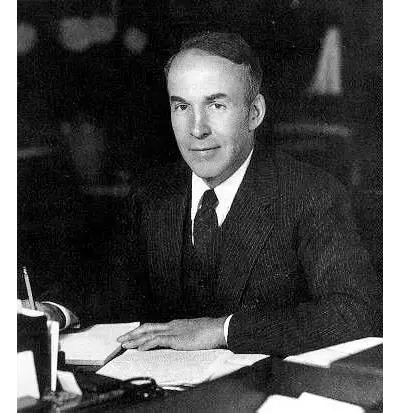
Archibald MacLeish was an American poet and writer, who was associated with the modernist school of poetry. MacLeish studied English at Yale University and law at Harvard University. He enlisted in and saw action during the First World War and lived in Paris in the 1920s. On returning to the United States, he contributed to Henry Luce's magazine Fortune from 1929 to 1938. For five years, MacLeish was the ninth Librarian of Congress, a post he accepted at the urging of President Franklin D. Roosevelt. From 1949 to 1962, he was Boylston Professor of Rhetoric and Oratory at Harvard. He was awarded three Pulitzer Prizes for his work.
