Peter Dicken Quotes
A striking feature of financial service activities during the past few decades is that the financial transactions essential to the operation of the 'real' economy has become increasingly dwarfed by speculative activity.
Peter Dicken, Geographer & Globalization Scholar, Global Shift, 2003
Sourced by: Eigen's Political and Historical Quotations


It was the souped up nature of the credit default swaps that was in part responsible for the souped up melt down of the economy of 2008 and the great recession thereafter. A credit default swap is an insurance policy that a company will pay off its bonds and not go bankrupt. It is a cross between an insurance mechanism and a stock exchange type security mechanism and through heavy lobbying escaped any kind of regulation. It cost a company no money to write a credit default swap and they were paid to do so. As long as business and the economy was good, it was a terrific business but there was no way of ever knowing how much risk they were taking. So companies who wrote credit default swaps did not have to have the money to pay to back them up if they business was bad. When that happened in 2008 even the largest insurance company in the world collapsed because of the risk of having to pay the credit default swap and the U. S. Government had to take over the insurance company. In 2010, the Obama administration passed a financial reform bill that began to regulate credit default swaps.

Keynes was suggesting a small transfer tax on securities and other financial instruments. For investors, such a tax would not be a significant burden, but it would discourage pure speculation. Generally every one likes that idea except the speculators. They in turn, play off one nation or jurisdiction against the others by threatening to take their stock and bond markets to other nations which do not have such a tax. That has worked for almost a century in avoiding such a tax in the United States which is the center for both world investment and speculation.

Threadneedle and Lombard streets was the center of the London Financial District.


The result was regulation of the banks and the creation of the SEC to regulate the stock market, However, over the years, the regulations were not able to keep up with the sophisticated development of new forms of investments and financial instruments and the financial industry were able to speculate with other people’s money in ways that FDR and his reformers never imagined. Finally, even the regulation that did exist was weakened by the policies of the George W. Bush administration and the combination brought about the Great Recession of 2008 where the profits from excess speculation were privatized and the losses, socialized with the taxpayer and the American worker bearing the brunt while most of the speculators were bailed out and made more money than ever. The Obama administration tried to reform the situation, but was unable to put an end to the legal speculation with other people’s money or of having institutions that were “too big to fail.”


A “stock-jobber” at that time referred to a stock broker who bought and sold shares of companies and enterprises. Today it tends to refer to an unscrupulous stock broker or a short term speculator. In the 18th century, economists like Say questioned whether or not the stock jobbers performed any useful economic or other function. His and others concluded “no.” By the 21st century, many were asking the same question. So it is not a new issue as to the political debate over the utility of part of the financial industry. The short term speculators were for years considered gamblers until it was discovered that the more successful ones generally had inside information (often illegal) or used computer trading to take advantage of other shareholders whose computers were not as fast. However, the Great Depression and the Great Depression called into question whether or not the financial industry was itself a hazard to national economies if not the world economy. That questioning began in the 18th century.


Credit default swaps were in large part responsible for the melt down of the economy of 2008 and the Great Recession thereafter. A credit default swap was one of the favorite derivatives that became popular. Is an insurance policy that a company will pay off its bonds and not go bankrupt. It is a cross between an insurance mechanism and a stock exchange type security mechanism, and through heavy lobbying, escaped any kind of regulation. It cost a company no money to write a credit default swap, and they were paid to do so. As long as business and the economy was good, it was a terrific business but there was no way of ever knowing how much risk they were taking. So companies who wrote credit default swaps did not have to have the money to pay to back them up. When that happened in 2008, even the largest insurance company in the world collapsed because of the risk of having to pay the credit default swap and the U. S. Government had to take over the insurance company. In 2010, the Obama administration passed a financial reform bill that began to regulate credit default swaps. Buffet, the American who had made the most money in financial securities, realized the great danger not only to the company, but to the entire national economy. Most of the rest of the financial institutions, could make large amounts of money without have to have much capital as long as things went well. So credit default swaps began to exceed the other financial instruments in activity. Neither the Federal Reserve or the other government regulatory agencies chose to regulate these risky instruments nor even to require that they be publicly disclosed -- See {637987}, {637986} and {637992}.


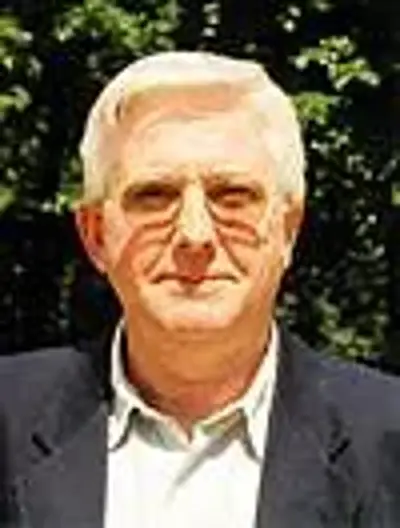
Peter Dicken (born 1938) is an economic geographer whose research is primarily focused on the processes and patterns associated with globalisation. He joined the University of Manchester in 1966 following the successful completion of his MA from the same institution. He is currently an Emeritus Professor at the same university to which he has dedicated his academic life, continuing his research on global patterns of business and globalisation. His self-described area of research is:
