William Butler Yeats Quotes
A statesman is an easy man, he tells his lies by rote.
A journalist invents his lies, and rams them down your throat.
So stay at home and drink your beer and let the neighbors vote.
Yeats, William Butler. "The Old Stone Cross." Last Poems and Two Plays, The Cuala Press, 1939, p. 28.


He was referring to the tendency of Arab diplomats and leaders to privately assure U. S. leaders about issues and then go home and make speeches in Arabic completely different from their private assurances and commitments. He advocated ignoring all private statements by Arabs and paying attention only to what they say in their own country and in Arabic. For a good example of an Arab politician doing this, see {585490}.

President George W. Bush, to justify the invasion of Iraq had told the public that the Iraqi regime was developing nuclear weapons and other weapons of mass destruction, and had participated in the September 11 attack on the United States by assisting Al Qaeda. It turned out that these statements were false. The administration claimed that their error was well intentioned and the result of faulty intelligence. Opponents claimed that the administration officials knew that they were exaggerating and had pressured the intelligence agencies to create intelligence conclusions that supported their story.

He was paraphrasing the findings of Political Scientist, John J. Mearsheimer. See {641228} and {641230} .


Alsop, a political hawk was convinced, as many other right wingers were at the time that the Russians had forged ahead of us in offensive missiles. When he asked President Eisenhower, the President never denied it, but never went to Congress to ask for more money to close the “missile gap”. Alsop made this shocking accusation which offended many Americans, but pleased the ultra-hawks and anti-communists. Most of the nation however then believed that there was a missile gap, with varying explanations of Eisenhower’s silence on the matter. Two years later John F. Kennedy, used the “missile gap” when running in 1960 against Nixon by attacking Nixon and Eisenhower for allowing us to fall behind the Russians at have a missile gap. When Kennedy became President, he was very surprised that there was no missile gap favoring the Russians—it was favoring the United States. Eisenhower did not want the Russians to know that he knew exactly what they were producing and deploying in missiles through great espionage sources. By not saying anything in the face of the accusations, the Russians assumed that the Americans really thought that they had more capacity than they did. And Eisenhower wanted that so that they would be secure that the United States had no real knowledge of their missile capacity. If Eisenhower had actually told the nation that the Russians were really behind us, the Russians would suspect a security leak and our sources could be compromised.


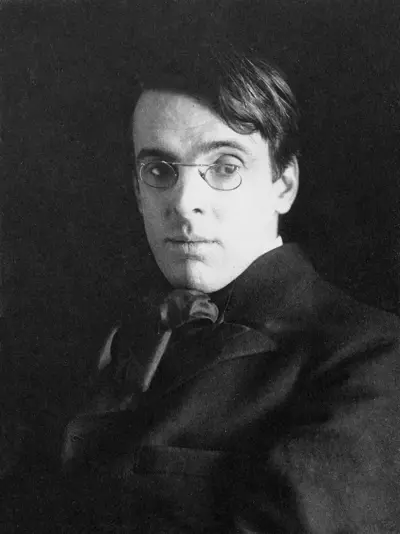
William Butler Yeats was an Irish poet, dramatist, prose writer and one of the foremost figures of 20th-century literature. A pillar of the Irish literary establishment, he helped to found the Abbey Theatre, and in his later years served two terms as a Senator of the Irish Free State. He was a driving force behind the Irish Literary Revival along with Lady Gregory, Edward Martyn and others.
