Jefferson Davis Quotes
A restitution of the Union has been rendered forever impossible.
Davis, Jefferson. A Compilation of the Messages and Papers of the Confederacy. Edited by James D. Richardson, United States Publishing Company, 1905, p. 291.

Fortunately he was wrong, but the threat of a breakup of the American Union intimidated most members of Congress to avoid anything that would offend a state or group of states. Thus slavery became more and more entrenched till it exploded into the Civil War. At the time the issues of contention included the fact that Louisiana was primarily Roman Catholic and ALL other states were majority Protestant. The territory functioned under French Law—the Napoleonic Code, while all the other states operated under the English Common Law (even today this is so), and there was concern with the French and Creole language and whether the Creoles would fit into American Culture.


He was Chancellor of the Exchequer at the time of this speech. Gladstone was certain about most of his views on foreign policy but correct on only some with many blunders on his watch. This view was very important for the Confederacy as it was a prerequisite to diplomatic recognition. The latter never came.

Crittendon, at the outbreak of the Civil War, had a Governor who wanted Kentucky to secede and join the Confederacy, but he and other leaders thwarted that and the state legislatures defied the governor and forced him to resign. 16 percent of Kentucky men held slaves and keeping Kentucky and Maryland in the Union was a very high priority for President Lincoln. See {633812}.


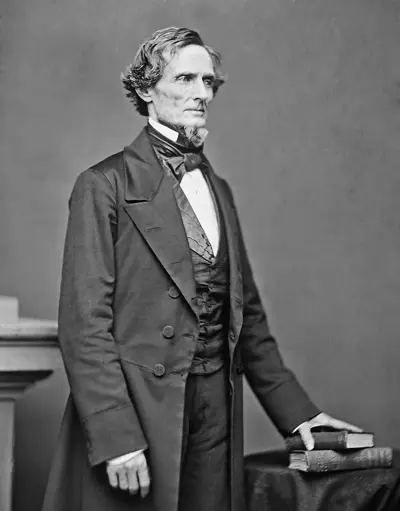
Jefferson Finis Davis was an American politician who served as the president of the Confederate States from 1861 to 1865. As a member of the Democratic Party, he represented Mississippi in the United States Senate and the House of Representatives before the American Civil War. He previously served as the United States Secretary of War from 1853 to 1857 under President Franklin Pierce.
