Neil Postman Quotes
...A new technology sometimes creates more than it destroys. Sometimes, it destroys more than it creates. But it is never one-sided.
Neil Postman, Author and Cultural Critic, "Informing Ourselves To Death", October 11, 1990
Sourced by: Eigen's Political and Historical Quotations


The nation was in the midst of a long debate over whether or not new bio-technology was appropriate and desirable for use and there were various efforts to legally curtail their application. These included cloning, stem cell research, radiated foods, fish farming, hydroponic agriculture, hybrid development and cross species organ replacement.
See {626813} for another quotation on this point.


Most scientists do not have the skill or the totality of knowledge to accurately predict the effect of scientific research and learning on society. Many are not interested. Those who try to communicate with politicians and the public are usually met with indifference or suspicion. Above all, the scientific and mathematical literacy of the public is so weak, that it is impossible in much of science to even explain the science to the lay public much less explain its implications. Soddy was a bit of an idealist from a class society and he felt the upper classes should be better informed by scientists.

There is an opposite school of thought which argues that because technology develops so fast, by the time you legislate about it of you understand it, it is too late to prevent major problems and abuses which can become institutionalized. Instead it is argued, legislate rapidly BEFORE you understand all the consequences and then repeal and revise very frequently as the technology develops. This school argues that Schmidt’s view is tantamount to not legislating at all as it will ALWAYS be too late if you wait till you understand the consequences.


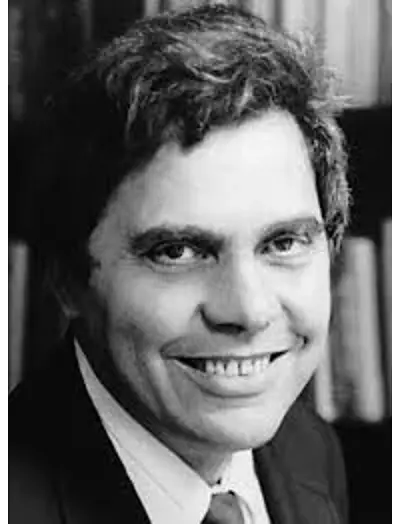
Neil Postman was an American author, educator, media theorist and cultural critic, who eschewed technology, including personal computers in school and cruise control in cars, and is best known for twenty books regarding technology and education, including Amusing Ourselves to Death (1985), Conscientious Objections (1988), Technopoly: The Surrender of Culture to Technology (1992), The Disappearance of Childhood (1994), and The End of Education: Redefining the Value of School (1995).
