Richard Henry Lee Quotes
A militia, when properly formed, are in fact the people themselves... and include all men capable of bearing arms.
Lee, Richard Henry. An Additional Number of Letters from the Federal Farmer to the Republican. New York, Thomas Greenleaf, 1788, p. 169.

More than a decade before Hamilton wrote this, a Maryland commission used the phrase “well regulated militia” earlier. (See {588394}.) It would be less than 2 years before the phrase “well regulated militia” would be added into the Constitution in the 2nd Amendment of the Bill of Rights—September 25, 1789. The Maryland resolution was the last of several passed at a meeting by which Maryland endorsed resistance to the British before the actual Revolution. So these resolations would have been widely distributed throughout the colonies and known by the leaders. Whether the drafters of the 2nd Amendment got the phrase from Hamilton’s Federalist 29 or from the Maryland Resolutions is not known but Hamilton’s was much more current. Did he get the phrase from Maryland? Did Congress get it from him? Did Maryland originate the phrase or was there an earlier use that influenced the Maryland drafters? At this point no one is sure, but the phrase is critical to the meaning of the 2nd Amendment because the Supreme Court has repeatedly held that the Second Amandment does not apply to individuals but only to the State’s right to bear arms within the “well regulated militia” and not as individual citizens. The right is that of the State government and that is why a state can control guns including banning them if they choose. So an individual in America does not have the constitutional right to bear arms. He may have a state constitutional right but in other states he may not use a gun in certain places and may not possess certain types of guns like hand guns which are illegal in New York, Washington DC and some other places.


President James Madison expressed a similar sentiment in his first inaugural address.


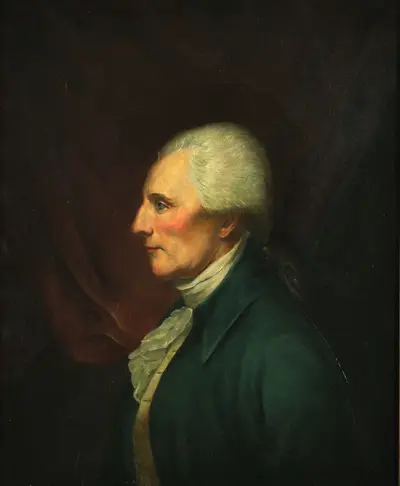
Richard Henry Lee was an American statesman and Founding Father from Virginia, best known for the June 1776 Lee Resolution, the motion in the Second Continental Congress calling for the colonies' independence from Great Britain leading to the United States Declaration of Independence, which he signed. He also served a one-year term as the President of the Continental Congress, was a signatory to the Articles of Confederation, and was a United States Senator from Virginia from 1789 to 1792, serving during part of that time as the second President pro tempore of the upper house.
