Marcus Aurelius Quotes
A man does not sin by commission only, but often by omission.
Aurelius, Marcus. Meditations. Translated by George Long, Dover Publications, 1997.


This text, generally considered the most important of all the Hindu works is believed to be the guidance given by Lord Krishna, the most important of the God figures, to has friend and devotee Arjuna. It originally was an episode of the enormous Mahabharata, the history of the ancient world written originally in Sanskrit. The date is approximate and different scholars have dated it from 500 BC to 50 BC. The Bhagavad Gita is generally regarded as the most concise description of Hindu philosophy. For some religions, fighting and war is not only permissible but can be a religious duty. Islam has the same notion. Christianity in contrast has had more of a theological struggle with war as a duty and even had to develop the concept of a “just war” to make fighting morally permissible. But this compunction, also shared with Buddhists and Bhai for example, is by no means universal. When religious Muslims fought religious Hindus as they have for over 1000 years, it is particularly difficult even today to make peace as so many on both sides see the battle as a religious duty.


Gregory the Great. The particular offences under discussion were incest which was common among the English people before they had been Christianized. The responsibility for acts “in ignorance of the law” has been debated as long as there has been law. Gregory’s view is remarkably contemporary.
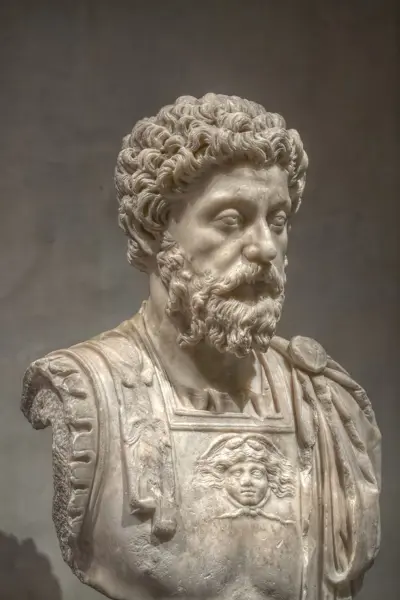
Marcus Aurelius Antoninus was Roman emperor from 161 to 180 and a Stoic philosopher. He was the last of the rulers known as the Five Good Emperors (a term coined some 13 centuries later by Niccolò Machiavelli), and the last emperor of the Pax Romana (27 BC to 180 AD), an age of relative peace and stability for the Roman Empire. He served as Roman consul in 140, 145, and 161.
