Holman W. Jenkins Jr. Quotes
A lot more than objectivity has gone missing in our reporting; intelligence has gone missing. The people in charge of the nation’s newsrooms, I continue to believe, are not as deeply, profoundly stupid as so much of what they put on their homepages, increasingly in positions calculated to attract clicks. Then I realize: The internet waits for no man. Neither does happy hour. Thinking and writing carefully require time and effort. The press hasn’t so much abandoned standards of objectivity; it has abandoned standards of effort under a digital imperative that not only favors low-intelligence “hot takes,” but makes them the calling card of what used to be a “news” industry.


Russert was so angry at the Sept. 11 attack that he felt he could not maintain objectivity in reporting regarding what America’s response ought to be. Like Pearl Harbor, almost all Americans were outraged. There were probably few American journalists who did not feel anger, but with Russert’s high standards of journalistic integrity he worried about it more and expressed his concern. Ironically, in the aftermath of Sept. 11, the American press & media tended not to examine administration responses with their normal cynicism and suspicion. At the time, George W, Bush, one of America’s poorest Presidents was in office, and before the media and the public looked into all the administration’s actions, the United States had gotten into what turned out to be a series of foreign policy and military quagmires, and had given $ billions worth of contracts to companies associated with the Vice President, the President’s family and others. Much of the money was never found or justified.

His use of the word “character” was not meant in the general sense of a reporter’s behavior and demeanor as a human being, but rather the journalists character relative to the battle—he does not wish to kill or injure anyone but wants to communicate the events to the public. This was the “purity” to which the General referred. Actually, a number of journalists and photographers followed the suggestion and wore a white—what looks today as a full-length lab coat. See http://memory.loc.gov/pnp/cwp/4a{40000}/4a{40900}/4a{40924}r.jpg for a photo of the uniform that photographer Mathew Brady wore.

Lincoln Steffens and Ida Tarbell had written exposes of business misconduct and lax government enforcement of laws. Politicians and business leaders were outraged and wanted something done to prevent this embarrassment and the riling up of the voting public. The President, a reformer himself, and a personal friend of Lincoln Steffens, took what seemed like a middle ground, where the government would not interfere with the 1st Amendment rights of the Journalists provided they did not go too far. But of course everyone had a different idea of “when to stop” so there never was a practical limit.
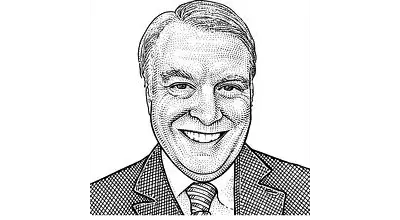
Holman W. Jenkins, Jr. is a columnist, editorial writer and member of the Wall Street Journal Editorial Board. He writes the twice-weekly column, "Business World," which appears in the paper and online every Wednesday and Saturday. He earned a bachelor's degree from Hobart and William Smith Colleges and a master's degree in journalism from Northwestern University. Aside from writing for The Wall Street Journal, he has also written for Policy Review and National Review.
